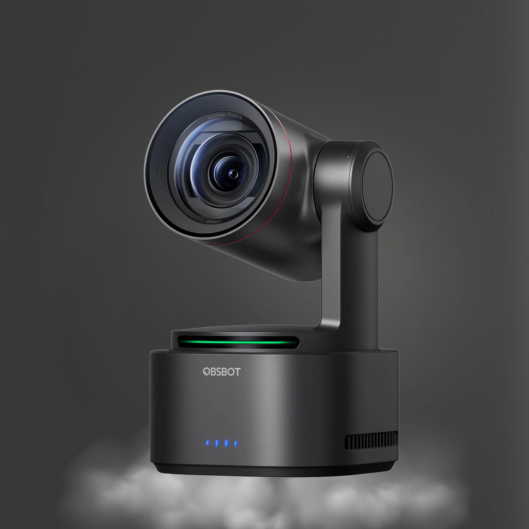
Best AI Tracking Camera Livestream Setups
A one-person stream breaks down the moment the presenter walks out of frame, turns to a whiteboard, or needs to demonstrate a product across the room. The best AI tracking camera livestream setup solves that production problem at the camera level: it recognizes the subject, adjusts framing automatically, and lets a smaller team deliver a more consistent broadcast.
That does not mean every AI camera is the right choice. A desktop creator needs a different tool than a house of worship running a long service, an educator moving through a classroom, or a corporate AV team distributing video over a network. The correct purchase comes down to tracking behavior, image output, control options, connectivity, and the rest of the live-production chain.
What Makes the Best AI Tracking Camera Livestream Setup?
AI tracking is valuable because it replaces repetitive camera operation with automated subject framing. Instead of assigning an operator to follow a speaker, the camera uses visual recognition to identify a person and drive pan, tilt, zoom, or digital framing as that subject moves. For livestreaming, the result should look intentional rather than reactive.
The difference is in how the camera tracks. Basic auto-framing may keep a face visible but make frequent, distracting adjustments. A stronger AI tracking system should maintain a usable composition, follow the subject predictably, and give the operator control over tracking speed, target selection, and framing zones. In a real stream, slow and stable camera movement is usually more valuable than aggressive reframing.
For many buyers, 4K is the next decision point. A 4K camera creates a cleaner primary image and provides room to crop for a 1080p broadcast without immediately losing detail. That is useful for presentations, product demonstrations, and vertical clips pulled from a wider horizontal recording. However, 4K also increases demands on the computer, capture device, network, and production workflow. If the final destination is a simple 1080p webinar, reliable tracking and clean exposure may matter more than maximum resolution.
PTZ, PTZR, and Auto-Framing Are Not the Same
A PTZ camera physically pans, tilts, and zooms. It is a practical choice when the presenter covers a wide area, when camera placement is farther from the stage, or when operators need stored presets for multiple positions. PTZ movement gives the camera true coverage of a room instead of only cropping inside a fixed lens view.
PTZR adds rotation capability, which matters for creators producing both landscape streams and vertical content. A camera that can switch orientation reduces the need to rebuild a set or use a separate camera for short-form vertical delivery.
An AI webcam or fixed-position camera uses a different approach. It can digitally crop and reframe within its sensor area, often in a compact format that works well for desktops, small studios, podcast sets, and remote meetings. This can be highly effective for a seated host or a standing presenter with limited movement. It is less appropriate for a large sanctuary, conference stage, or training room where physical pan and zoom are needed.
Choose by Production Environment, Not Just Camera Specs
The best AI tracking camera livestream configuration begins with the room and the subject's movement pattern. Start by identifying where the camera will sit, how far it will be from the presenter, and whether that presenter is alone or part of a group.
For a solo creator, a compact 4K AI webcam can be the efficient choice. It reduces setup time, connects directly to the streaming computer, and can maintain head-and-shoulders framing during a seated broadcast. This format is especially effective for gaming commentary, tutorials, product reviews, online coaching, and remote interviews. Look for reliable autofocus, low-light performance, usable manual image settings, and a way to disable tracking when a locked-off frame is preferred.
For educators and corporate presenters, a PTZ or PTZR camera offers more flexibility. A presenter may move from a lectern to a display, turn toward participants, or write on a board. Tracking needs to accommodate those movements without cutting off the subject or drifting to another person in the room. Presets are equally important here. A single operator can recall a wide room shot, a podium shot, and a close presenter frame while the AI handles the movement between those planned positions.
For houses of worship and event teams, prioritize optical zoom, PTZ presets, stable long-duration operation, and control integration. A wide venue requires more than a camera that can recognize a face at close range. It needs lens reach and controlled motion that maintain a clean composition from the rear of the room. AI tracking can reduce operator workload, but it should complement a planned camera layout rather than replace it entirely.
Studios and production teams should consider networked workflows early. An NDI-enabled camera can carry video, audio, control, and power across an Ethernet-based setup, reducing the need for individual video runs and local power at every camera position. NDI is particularly useful in multi-camera spaces where cameras feed a switcher or software production system over the local network. It does require a properly designed network. Do not assume an overloaded office network will deliver dependable live video without testing bandwidth, switch capacity, and segmentation.
The Signal Path Matters as Much as the Camera
A camera with excellent AI tracking still needs to fit the rest of the livestream system. Before choosing a model, confirm the output formats your switcher, capture hardware, or streaming computer can accept. HDMI remains a practical option for direct camera-to-switcher and camera-to-capture workflows. USB is convenient for computer-based streaming. NDI is designed for flexible networked production. Some advanced setups use more than one output type for separate program, monitoring, and recording paths.
Control is another operational requirement. In a simple desktop workflow, the camera's software or handheld remote may be enough. In a multi-camera environment, operators benefit from PTZ controller support, preset recall, and centralized control. A camera that tracks well but cannot integrate into the control method your team already uses can create more work during a live event.
Do not overlook switching. The tracked camera may be the main shot, but a professional broadcast still needs alternate angles, presentation feeds, playback, graphics, and a fallback shot. A live video switcher lets an operator move between those sources without exposing every AI tracking adjustment to the audience. This is one reason automated tracking is most effective as part of a complete production workflow, not as an isolated feature.
Audio Prevents a Good Camera From Becoming a Weak Stream
Viewers will tolerate a slightly imperfect frame longer than they will tolerate hollow, noisy, or inconsistent speech. Match the microphone to the room and use case. A lavalier microphone suits a presenter who needs to move freely. A shotgun microphone can work well when it is positioned close enough to reject surrounding room noise. Conference microphones are appropriate for shared table discussions, while a dedicated vocal microphone is often the better choice for a seated host or podcast setup.
For events and larger rooms, plan audio separately from camera tracking. The camera may follow the speaker, but the microphone must still deliver consistent pickup as that speaker turns, walks, or moves away from the main sound system. If audio and video enter a switcher or software platform through separate paths, test synchronization before going live.
Essential Checks Before You Buy
The specification sheet should answer practical questions, not just advertise AI capability. Confirm these details before building your setup:
- Whether tracking works for one person, groups, hand gestures, or a selected target
- The available output connections, including USB, HDMI, and NDI where required
- 4K and 1080p frame-rate options that match your streaming platform and switcher
- PTZ range, optical zoom, preset support, and rotation capability for the room
- Mounting options, power requirements, and control methods
- Microphone, switcher, capture, and network compatibility across the full signal path
A final test should mirror the live show. Walk the full presentation area, trigger every scene and preset, test the longest cable or network path, and listen on the device your audience is most likely to use. The right AI tracking camera should disappear into the workflow, leaving the presenter free to move and the production team free to focus on the program.