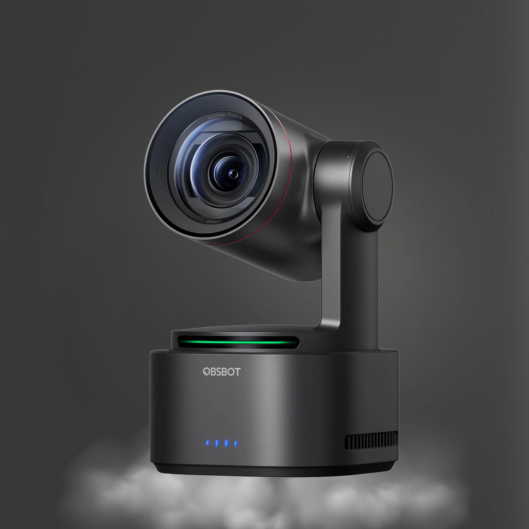
NDI PTZ Camera for Smarter Live Production
A fixed camera can deliver a clean picture, but it cannot reframe a presenter who steps away from the lectern, follows a teacher across a whiteboard, or create a second angle during a live interview. An NDI PTZ camera addresses that production gap by combining remotely controlled pan, tilt, and zoom movement with video, audio, control, and tally data carried over an IP network.
For livestreamers, educators, corporate teams, houses of worship, and compact studios, that combination can reduce cabling and operator workload without reducing control. The right setup is not simply about choosing a camera with NDI on the spec sheet. It depends on network capacity, the type of NDI implementation, lens requirements, automation needs, and the wider switching and audio workflow.
What an NDI PTZ Camera Changes in a Production Setup
NDI is a network video technology designed to move low-latency video between compatible devices on the same network. Instead of running a dedicated SDI or HDMI cable from every camera to a switcher, an NDI camera can send its signal through Ethernet. In many installations, the same network connection also delivers power through PoE, receives PTZ commands, and communicates tally status.
That changes the physical design of a room. A camera can be mounted at the back of an auditorium, above a stage, or in a conference room where running multiple production cables would be inconvenient. One properly planned network cable can replace separate video, control, and power runs. It also makes camera placement more flexible when the production control position is located in another room.
PTZ movement adds another layer of efficiency. One operator can recall framing presets, move between a wide room shot and a speaker close-up, or control multiple cameras from a hardware controller, software interface, or compatible switcher. For productions with limited staff, this is often the practical reason to adopt PTZ rather than a simple desire for automated camera movement.
AI tracking can extend that advantage. An AI-powered PTZ camera may recognize and follow a presenter or selected subject, maintaining framing while the person moves. This is useful for solo educators, fitness instruction, product demonstrations, worship services, and presentations where an operator cannot dedicate attention to camera control. Tracking is not a replacement for intentional camera direction, however. A fast-moving subject, a crowded stage, or frequent obstructions can still require manual oversight.
NDI PTZ Camera Workflows That Make Sense
An NDI PTZ camera is most valuable when its networked capabilities solve a real workflow problem. In a corporate studio, a compact control room can operate cameras installed across meeting spaces without rebuilding each room around local video infrastructure. In a classroom or training facility, preset positions can switch from instructor framing to a demonstration table or audience questions.
For live events, NDI can simplify temporary deployment when a managed network is already available. A camera at front of house can feed a production computer or switcher without an extended baseband video run. That said, event networks require caution. A shared network used by guest devices, ticketing, venue operations, and production traffic is not automatically suitable for video. Production traffic should be planned, monitored, and separated where appropriate.
Creators working from a studio have different priorities. They may need a camera that can output a clean 4K image, track a host, feed a computer-based switching workflow, and support vertical as well as horizontal content production. Here, NDI provides flexibility, but it should be evaluated alongside USB, HDMI, and SDI options. A hybrid-output camera can be a better long-term choice when the workflow includes both direct computer capture and network-based multi-camera production.
Network Planning Is Part of Camera Planning
An NDI workflow is only as reliable as the network carrying it. The camera is not a standalone appliance once it becomes a network video source. It shares an environment with switches, computers, control surfaces, encoders, storage, and potentially internet traffic.
High-bandwidth NDI formats preserve image quality but require significant network throughput, particularly when multiple 4K sources are active. NDI HX uses compression to reduce bandwidth requirements, making it attractive for many compact installations, but it can involve different latency, quality, and compatibility considerations. Neither option is universally better. The correct choice depends on the number of cameras, resolution, switch capacity, production software, and the acceptable trade-off between bandwidth and compression.
Before purchasing, verify these four points:
- The camera's NDI format and the compatibility of the switcher, software, or decoder receiving it.
- Whether the network switch has sufficient Gigabit capacity, PoE budget, and managed features for the number of connected devices.
- The intended resolution and frame rate, especially if several 4K feeds will run at the same time.
- How PTZ control, tally, audio embedding, and backup video outputs will be handled in the final system.
Camera Specifications That Affect the Result
NDI connectivity makes routing easier. It does not compensate for a weak image sensor, insufficient optical zoom, poor low-light performance, or unconvincing motion. Evaluate the camera as a camera first, then as a network device.
Resolution matters when the final program is 4K, when operators need room to crop, or when a wide shot must retain detail. Frame rate matters for sports, movement-heavy presentations, and broadcast-style production. A 30 fps workflow may be fully appropriate for a business presentation, while 60 fps can provide more natural motion for active content. The key is consistency across cameras and the production pipeline.
Optical zoom deserves close attention in larger rooms. Digital zoom enlarges pixels already captured by the sensor. Optical zoom changes the lens field of view and retains more usable detail at distance. A conference room camera may need modest zoom, while a church sanctuary, lecture hall, or event venue may require a substantially longer optical range to capture close framing from the rear of the room.
PTZ speed and preset accuracy also affect the on-air experience. A camera should move predictably, stop cleanly, and return to stored positions with reliable framing. Smooth slow movement is useful for live transitions, while fast recall is useful when a speaker suddenly moves to another position. Test how the camera behaves in the exact lighting and distance conditions of the intended installation.
Pair the Camera With Control, Switching, and Audio
A camera feed is only one part of a credible live production. An NDI-capable video switcher or software production environment can receive camera sources, create layouts, add graphics, manage transitions, and send the finished program to streaming platforms or displays. A dedicated PTZ controller can give an operator tactile control over pan, tilt, zoom, focus, and presets when software control is too slow for active directing.
Audio should be designed independently from the camera position. A ceiling-mounted PTZ camera may provide embedded audio capability, but it is usually not the best location for clear speech pickup. A purpose-built wireless lavalier, conference microphone, shotgun microphone, or vocal microphone will produce more controlled dialogue and reduce room noise. The final mix can then be embedded into the program feed for a coherent stream or recording.
This is where a curated production stack has practical value. Kong Kei Industrial combines OBSBOT AI camera options with switching and specialized CKMOVA microphone categories, allowing buyers to plan the signal path rather than treating each device as an isolated purchase.
When NDI Is Not the Best Answer
NDI is not mandatory for every PTZ installation. A single-camera desktop setup may be better served by USB for direct connection to a computer. An established broadcast facility with SDI infrastructure may prefer SDI as its primary transport, using NDI only where network routing adds flexibility. Some productions also require the predictable simplicity of a direct HDMI connection for a nearby monitor or encoder.
The strongest systems often use more than one output method. NDI can feed the networked production environment, while HDMI or SDI provides a local confidence monitor, recorder, or backup path. This approach adds equipment and planning, but it can be worthwhile for high-stakes live events.
Choose an NDI PTZ camera when remote framing, scalable routing, reduced cabling, and centralized control are meaningful operational gains. Start with the room, the operator count, the network, and the final program requirements. Once those details are clear, the camera becomes more than a moving lens: it becomes a controllable production source that can keep pace with the work around it.