How to Choose a 4K Webcam for Professional Video
A 4K webcam is no longer just a premium upgrade for video calls. For creators, educators, corporate teams, and compact studios, it can be the primary camera for a polished streaming, recording, or presentation workflow. The right model delivers more than extra pixels: it gives you room to crop, reframe, track a presenter, and maintain a professional image on modern high-resolution displays.
The specification on the box is only the starting point. A camera that records 4K may still be the wrong fit if its field of view is too wide, its autofocus hunts during a presentation, or its USB connection limits the frame rate you need. Choosing well means matching the camera to the job, the room, and the rest of your production equipment.
What a 4K Webcam Changes in Your Workflow
At 4K resolution, a camera captures four times as many pixels as 1080p. That can produce a cleaner image when your final output is 4K, but its practical value often shows up even when you stream in 1080p. A 4K source gives video software, switchers, and editing tools more image area for a digital crop without making the delivered image look soft.
For a solo presenter, that flexibility can replace a second camera angle in simple productions. You can frame a medium shot for a webinar, crop tighter for a short-form segment, or leave room for slides and graphics in a widescreen layout. It is especially useful for educators showing products, tabletop demonstrations, documents, or whiteboards.
There is a trade-off. Higher resolution demands more from the connection, host computer, storage, and video application. Before prioritizing 4K, confirm whether you need 4K at 30 frames per second, 4K at 60 frames per second, or a high-quality 1080p feed. A fast-moving product demo or live performance may benefit more from 1080p60 than 4K30.
Start With the Room and Shot Size
A webcam is fixed near a display, monitor, tripod, or small desktop mount, so lens choice matters immediately. A wide field of view can help in a small conference room or when several speakers share one camera. In a home office, though, an overly wide lens can make the subject look distant and expose more of the room than intended.
For one-person video, look for a camera that supports digital zoom, adjustable framing, or AI auto-framing. These functions let the camera create a more deliberate composition without requiring you to constantly reposition the mount. The result is usually stronger than relying on a very wide default shot.
Room depth also affects the choice. If the presenter sits close to a wall, background separation will be limited regardless of resolution. A larger sensor and good exposure control can improve the image, but thoughtful lighting and camera placement still do much of the work. Position the camera near eye level, move the subject away from the background when possible, and avoid placing a bright window directly behind them.
Sensor Size and Low-Light Performance
A 4K label does not describe sensor size, lens quality, or processing. These factors influence how natural a face looks under office lighting and how well the camera controls noise in darker rooms. Small sensors can look excellent with proper key lighting, but they have less margin when a room is lit only by ceiling fixtures or a monitor.
Look for cameras with manual exposure, white balance, and image adjustments when color consistency matters. Automatic settings are convenient for daily calls, yet they can shift brightness or color temperature during a livestream. Manual control is valuable for recurring productions because you can establish a repeatable look and keep it across sessions.
HDR can also help when a speaker faces a window or works under mixed lighting. It is not a replacement for lighting control. HDR may preserve highlights and shadow detail, but it can create an unnatural image if the scene is poorly balanced. For predictable results, a soft front light is usually the better first investment.
AI Tracking Is Useful When It Solves a Real Problem
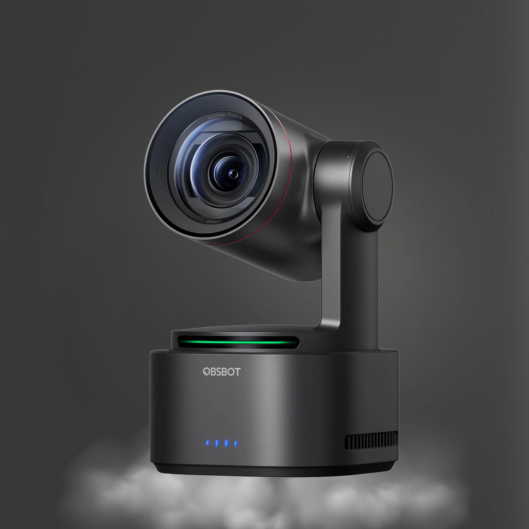
AI tracking separates advanced creator webcams from basic USB cameras. Rather than keeping a fixed frame, a tracking camera can follow a speaker as they move, automatically pan and tilt, or adjust its crop to maintain a useful composition. This reduces the need for an operator during presentations, fitness instruction, teaching, product demonstrations, and live selling.
The best tracking mode depends on the content. Face tracking works well when the presenter stays near a desk. Body tracking is more appropriate when the presenter walks, gestures, or uses a stage area. Group framing can help in small meeting rooms, although an automated camera may not always choose the composition a director would choose.
Physical PTZ movement and digital tracking are different tools. A PTZ webcam can reposition the lens through pan, tilt, and zoom movement, preserving more of the sensor's image area as it follows a subject. Digital tracking crops into a wide 4K image, which is quiet and fast but can reduce the remaining resolution at tighter framing. Both approaches can be effective. The choice depends on how much the subject moves and how controlled the final framing must be.
For repeatable presentations, preset positions are equally valuable. A presenter may need one shot for speaking, one for a tabletop area, and one for a whiteboard. PTZ presets make those transitions faster and more consistent than manual reframing.
Connectivity Determines Whether the Camera Fits
Most webcam workflows use USB Video Class, often called UVC, which allows the camera to work with common conferencing and streaming software without a separate capture device. That simplicity is ideal for a personal workstation, podcast desk, or mobile production kit.
However, USB has practical limits. Cable length is limited, available bandwidth may be shared with other peripherals, and not every computer port delivers the same performance. A 4K webcam may need a direct high-speed USB connection to offer its best modes. Connecting through an underpowered hub can cause detection problems, reduced resolution options, or unstable operation.
For multi-camera rooms, network-based video is often more efficient than extending USB across a space. NDI-enabled cameras place video on the local network for access by compatible switchers, control systems, and production computers. This approach can reduce cable complexity, but it requires a properly designed network with sufficient capacity. It is a production decision, not simply a camera feature to check off.
HDMI output is another consideration for users working with hardware switchers and capture devices. If you intend to build a live-production system around multiple camera sources, verify the output formats, control options, and whether the selected camera can provide clean video without on-screen menus.
Do Not Let Camera Resolution Hide an Audio Problem
Viewers will often tolerate a slightly softer image before they tolerate unclear speech. Built-in webcam microphones are useful for quick calls, but their position near a computer fan, keyboard, and reflective desktop makes them a limited choice for professional work.
A USB microphone, wireless lavalier, shotgun microphone, or conference microphone can be matched to the production environment. A close microphone improves speech clarity and reduces room noise. For panel discussions and meeting tables, the pickup pattern and placement matter as much as the microphone model.
When using separate audio and video sources, confirm how your conferencing or streaming software handles synchronization. Audio delay can be corrected, but it is better to test the complete signal path before a live event. This includes the camera, microphone, USB connection, switching software, and recording destination.
Build Around the Production Level You Need
For daily meetings and remote teaching, a fixed 4K USB webcam with good autofocus, manual image control, and clear framing may be all that is needed. Add a dedicated microphone and a small key light, and the improvement can be substantial.
For frequent livestreaming, choose a camera with reliable 4K output, AI tracking or framing support, and controls that fit your software environment. A compact PTZ webcam is especially useful when one person must present and operate the show at the same time.
For corporate events, houses of worship, and multi-camera studios, consider the wider system. Network video, PTZ control, presets, hardware or software switching, and purpose-built audio capture can reduce staffing pressure while giving operators more consistent results. Kong Kei Industrial curates these connected camera, switching, and audio categories for buyers who need the equipment to work as one production stack.
Before purchasing, test your intended resolution and frame rate against the actual computer, cables, room lighting, and application. The best 4K webcam is the one that maintains a controlled image and dependable connection when the presentation is live, the speaker starts moving, and there is no time to troubleshoot.