Best Switchers for Mobile Studios in 2026
A mobile studio succeeds or fails at the switching position. Cameras may deliver sharp 4K images and AI tracking, but the production still needs one dependable control point for cutting angles, managing presentation sources, routing audio, and delivering a clean program feed. The best switchers for mobile studios are not necessarily the largest units or the models with the longest specification sheet. They are the switchers that match your camera connections, crew size, transport limits, and required output format.
For a solo creator, a compact HDMI switcher with built-in streaming can remove the need for a separate capture device and computer-based encoder. For a corporate AV team or event producer, SDI, balanced audio, redundant power, and multi-view monitoring may matter more than a small chassis. Start with the workflow, then choose the hardware.
What a Mobile Studio Switcher Must Do
A mobile production setup has a tighter margin for complexity than a fixed control room. Every converter, power supply, network adapter, and loose cable creates another possible point of failure. A suitable switcher should consolidate essential tasks while preserving the connections your production actually uses.
At minimum, assess input count, input type, output options, audio I/O, streaming capability, recording, and control. Four video inputs are enough for many compact productions: a wide camera, a close camera, a presentation computer, and a playback or graphics source. That same four-input limit can become restrictive quickly when you add a confidence camera, remote guest, product close-up, or backup feed.
Video format support matters just as much as input count. A 1080p switcher remains practical for many live platforms and internal corporate streams, especially when the production is camera-limited to HD. Choose 4K switching when 4K delivery is required, when cameras need to stay in a 4K production chain, or when the switcher will serve as a longer-term center of a premium studio. Do not pay for 4K simply because the cameras offer it if every downstream destination remains 1080p.
Best Switchers for Mobile Studios by Workflow
The right category depends on how your studio moves, who operates it, and where the finished program goes.
Compact HDMI switchers for creators and educators
HDMI switchers are the logical starting point for portable creator studios, podcast rooms, classrooms, and small interview sets. They pair directly with many mirrorless cameras, webcams, laptops, and compact production cameras. Their practical advantage is a clean setup with readily available short HDMI cables and fewer external converters.
Look for at least four HDMI inputs, a dedicated HDMI program output, USB webcam output, and direct Ethernet streaming. Built-in streaming lets the switcher send RTMP directly to supported platforms or a streaming service, reducing dependence on a dedicated encoding computer. A USB output is equally useful for Zoom, Teams, OBS, and webinar platforms that recognize the switcher as a webcam source.
The trade-off is cable distance. Standard HDMI is best kept short and protected. If your cameras must be positioned across a large room, an auditorium, or a stage, active optical HDMI can help, but SDI is often the more operationally reliable choice.
SDI switchers for events, worship, and corporate AV
SDI switchers are built for installations and mobile productions that need longer cable runs, locking connectors, and predictable signal handling. A single SDI cable can run substantially farther than conventional HDMI while carrying a professional video signal, making it well suited to conferences, houses of worship, sporting events, and multi-room corporate productions.
For this category, prioritize the number of SDI inputs and outputs, frame-rate support, multi-view output, and audio routing. A multi-view display is particularly valuable for a one-person crew because it places every camera, preview, program, audio meter, and source status on one screen. An auxiliary output is also useful for sending a separate feed to a projector, confidence monitor, teleprompter, or recording device.
A mixed HDMI and SDI switcher can be a smart middle ground. It accepts professional cameras over SDI while keeping direct HDMI ports available for laptops and compact cameras. This avoids purchasing converters for every presentation source.
NDI-capable switchers for networked production
NDI changes the physical layout of a mobile studio. Instead of home-running each camera with a video cable, compatible cameras and production devices can share video, audio, control, and tally data over a managed network. This is especially useful for studios using AI-powered PTZ cameras in spaces where camera placement changes frequently.
An NDI workflow needs more planning than a basic HDMI setup. Use a gigabit network designed for production traffic, verify switch capacity, and account for network cabling, power, and device discovery before an event day. NDI can reduce video-cable clutter, but it does not remove the need for disciplined network design.
For a compact NDI studio, consider whether the switcher supports native NDI inputs or whether a computer-based production system will receive the sources. Native network inputs reduce conversion hardware. A switcher with PTZ control can also centralize camera movement, presets, and image selection, which is a meaningful operational benefit when one operator is handling both framing and switching.
Portable all-in-one switchers for fast deployments
All-in-one switchers combine switching, encoding, recording, graphics, and control in a single portable unit. They fit teams that repeatedly deploy in hotel meeting rooms, client offices, trade show booths, and temporary studios. The goal is not to add every possible feature. It is to reduce setup time and make the signal path easier to verify.
A useful mobile unit should offer physical buttons or a clear touchscreen interface for live operation, not only software control. It should also support a stable power arrangement, either through a locking DC input, standard AC power, or a battery-compatible solution. Before buying, confirm whether the unit records to common media, supports ISO recording if needed, and can create a clean program feed without overlays.
The Specifications That Affect Real Productions
Input quantity gets attention first, but several less obvious specifications determine whether a switcher works under pressure.
Audio control deserves careful evaluation. Embedded camera audio is convenient, but spoken-word production usually needs dedicated microphones and independent level control. Look for line-level or mic-level inputs that fit your audio chain, gain adjustment, headphone monitoring, and the ability to delay or mix audio correctly. A CKMOVA shotgun, lavalier, conference, or vocal microphone can provide clearer capture than a camera-mounted mic, but the switcher still needs to accept and manage that signal properly.
Frame synchronization is another major consideration. Some switchers synchronize inputs internally, while others may require matched camera settings or external synchronization for specific formats. In a mobile studio, standardizing every camera to the same resolution and frame rate before setup prevents black screens, conversion artifacts, and avoidable troubleshooting.
Recording is valuable even if the event is live. A switcher that records the final program creates an immediate archive for editing, social clips, compliance, or client delivery. ISO recording adds separate files for each source and provides more flexibility in post-production, but it requires greater storage capacity and creates a larger media-management task.
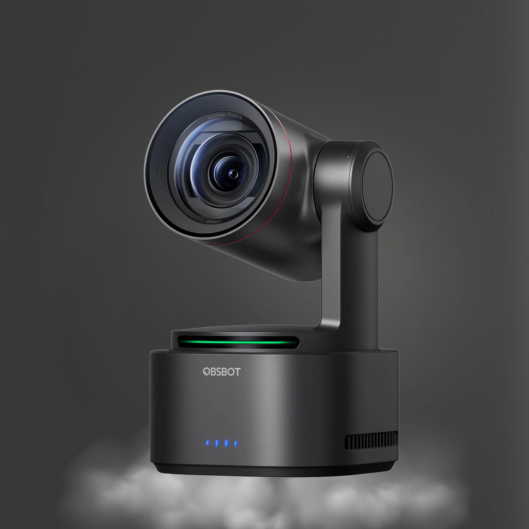
Finally, inspect control options. Hardware buttons are fast for live cuts. A control panel can improve operation for larger productions. IP control and PTZ integration let an operator call camera presets, adjust framing, and manage sources from one position. When paired with an OBSBOT AI tracking camera, this can reduce the manual workload in interviews, demonstrations, teaching environments, and single-presenter streams.
Build Around Signal Paths, Not Product Categories
A switcher should be selected after drawing the complete signal path: cameras and computers enter the switcher, audio enters through the chosen mixing point, then program video goes to stream, recording, displays, or broadcast infrastructure. Include tally, control, networking, monitoring, and power in that drawing.
For example, a two-camera interview studio may need only four HDMI inputs, USB output for conferencing, a stereo audio input, and a program recording function. A traveling event team may need six or more SDI inputs, multi-view, dual program outputs, XLR audio integration, Ethernet control, and an independent streaming encoder. Both are mobile studios, but the right switcher is fundamentally different.
Avoid building a system around adapters as the default. A single converter for an occasional laptop is reasonable. Relying on multiple converters to make every camera, monitor, and audio source fit raises setup time and makes fault isolation harder. Choose native ports that serve the majority of your equipment.
A Practical Buying Decision
Choose a compact HDMI switcher when portability, direct camera compatibility, and simple streaming are the priority. Move to SDI when cable distance, connector security, and event-grade infrastructure matter. Choose NDI support when networked cameras, flexible room layouts, and centralized PTZ control justify the network planning. Select an all-in-one unit when speed of deployment matters more than modular expansion.
The strongest mobile studio is not the one with the most inputs on paper. It is the one whose switcher, cameras, microphones, monitors, and network behave as one predictable system when the presenter starts speaking and there is no time left to troubleshoot.