Switcher Buying Guide for Multi-Camera Production
A switcher becomes the center of a live production the moment you add a second camera, presentation source, or remote guest. This switcher buying guide focuses on the decisions that affect real-world operation: how many sources you can bring in, whether your camera formats match, how quickly an operator can work, and what happens when the program needs to reach an audience without delay.
For a solo creator, a compact HDMI switcher may be the right answer. For a corporate AV team, house of worship, or event producer, the better fit may be a larger system with SDI, network video, redundant outputs, and dedicated control. The best choice is not the switcher with the longest specification sheet. It is the one that fits the full signal path from camera and microphone to display, recorder, streaming platform, and operator position.
Start With Your Production Sources
Count every source that must be available during the show, not just the cameras. A basic setup may use two cameras and a laptop. A more capable workflow can add a presentation computer, playback device, remote caller, graphics system, or confidence monitor feed. If you need four sources today, choosing a switcher with exactly four inputs can create an immediate limitation when a client asks for a second presentation computer or an additional camera angle.
Input count alone does not tell the whole story. You also need to identify the connection type used by each source. HDMI is common in compact cameras, webcams, laptops, and creator-focused production equipment. SDI is usually the stronger choice for longer cable runs, fixed installations, and professional event environments. NDI and other IP video workflows can reduce physical cabling and make network-connected cameras easier to deploy, but they place new demands on network design, bandwidth, and configuration.
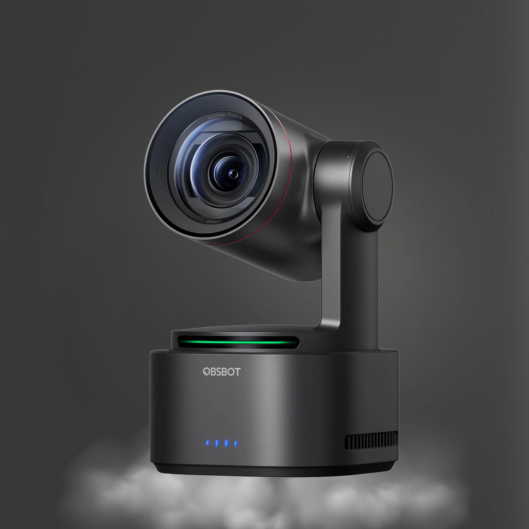
A mixed workflow is common. For example, an OBSBOT AI PTZ camera may provide intelligent subject tracking and remote framing while another camera supplies a fixed wide shot. Before buying, verify whether the switcher accepts the outputs your cameras provide directly. Converters can solve compatibility problems, but each converter adds cost, power requirements, points of failure, and sometimes delay.
Plan for the Inputs You Do Not Have Yet
Leave capacity for growth. A practical target is one or two spare inputs beyond your regular production plan. This creates room for a backup laptop, a media player, a guest camera, or a dedicated confidence feed without rebuilding the system.
Also consider physical placement. A switcher used at a desk can work well with short HDMI runs. A switcher located at front of house while cameras operate across a sanctuary, auditorium, or event floor will often favor SDI or an IP-based workflow. Connector choice is an operational decision, not a minor specification.
Match Resolution and Frame Rate Before You Buy
Every source should be evaluated for resolution and frame rate. A 4K camera does not automatically mean the entire live workflow needs to be switched in 4K. Many productions acquire in 4K for reframing or future use but deliver a 1080p program stream. That can be efficient, provided the switcher handles the incoming signals and output format you need.
Frame rate mismatches are a common cause of avoidable trouble. A camera operating at 59.94 fps, a presentation computer at 60 Hz, and a switcher configured for 29.97 fps may not behave as expected without conversion. Some switchers scale or convert inputs automatically; others require every source to match the selected production standard. Automatic conversion simplifies setup, but dedicated format discipline can be more predictable in critical productions.
Confirm these points before checkout: the maximum input resolution, supported frame rates, output resolutions, and whether the unit performs frame synchronization or scaling on each input. If your workflow includes vertical content for social platforms as well as a standard horizontal program feed, verify the switcher and downstream encoder can support that production plan. A 16:9 live switcher does not automatically create a well-composed 9:16 program.
Choose the Right Switching Workflow
The physical interface affects how confidently an operator can run a live show. Small switchers with illuminated buttons are fast to learn and well suited to creators, classrooms, and compact interview setups. Larger panels provide more direct access to sources, transitions, keyers, audio controls, and macros. They make more sense when one person is dedicated to technical direction or when the production must move quickly between many cameras.
A multiview output is one of the most useful features for multi-camera work. It lets the operator see camera inputs, program output, preview, audio meters, and source labels on one display. Without it, operators often switch by memory or rely on separate monitors, which increases the chance of taking the wrong source live.
Preview and program outputs matter as well. Preview lets you prepare the next camera, graphic, or playback source before it goes on air. Program is the live result. In a simple production, you may only need program output. In a professional workflow, preview is essential for controlled transitions, lower-third graphics, picture-in-picture layouts, and reliable cueing.
Transitions, Keyers, and Picture-in-Picture
Cuts and dissolves cover most camera-to-camera switching. More advanced productions may need upstream keyers for lower thirds, logos, sponsor graphics, or green-screen sources. A downstream keyer can be useful for persistent branding elements. Picture-in-picture and split-screen layouts support interviews, training sessions, product demonstrations, and hybrid meetings where a presenter and shared content must remain visible together.
Do not buy advanced effects only because they are available. Ask how often your team will use them under live pressure. A clean cut between well-framed camera shots is usually more valuable than a complex transition that slows the operator down.
Treat Audio as Part of the Switching Decision
A live program fails faster from unclear audio than from a modest difference in image quality. Your switcher should fit the way you capture, mix, and monitor sound. Some compact units include basic audio inputs and channel mixing, which can be enough for a single presenter and a playback source. Larger productions may need an external audio mixer, dedicated microphones, mix-minus feeds for remote guests, and separate monitor outputs.
Check the available audio connections and determine whether embedded audio from cameras or computers must be used. If you work with CKMOVA shotgun, lavalier, conference, or vocal microphones, consider where preamps, phantom power, gain control, and audio processing will sit in the chain. A microphone should not be plugged into a switcher merely because an input exists if the workflow requires a proper mixer or audio interface first.
Audio-follow-video can be useful when switching between sources with embedded sound, but it can also cause abrupt changes in room tone or playback levels. For presentations, interviews, and worship services, a separate program mix is often the more controlled choice. Make sure the operator can monitor the final program audio on headphones, not only on room speakers.
Decide Whether You Need Built-In Streaming and Recording
Some switchers include a hardware streaming encoder, allowing the program feed to go directly to a streaming service over Ethernet. This reduces dependence on a computer and can make a compact production more reliable. It is a strong option for recurring broadcasts where the format and destination are consistent.
Computer-based streaming remains valuable when you need custom graphics, multiple destinations, audience interaction tools, virtual scenes, or more flexible recording control. In that workflow, verify the switcher can deliver a clean USB webcam output or another compatible program feed to the streaming computer.
Recording requirements should be defined separately. A program recording is useful for immediate publishing and archive purposes. ISO recording, which captures individual camera feeds, provides far more flexibility in post-production but requires additional storage and compatible equipment. If a client expects a polished edit after a live event, program-only recording may not be enough.
Evaluate Control, Automation, and Camera Integration
A switcher handles source selection, but the broader production system may also need camera control. PTZ and PTZR cameras require pan, tilt, zoom, presets, exposure adjustments, and framing control. AI tracking can reduce the burden of following a presenter, especially for solo operations, but it does not remove the need to plan shots, presets, and fallback framing.
Consider whether you need physical camera-control hardware, software control, IP control, or serial control. In a fixed studio, preset recall can make a small team look considerably more organized. For example, one preset can frame a standing presenter, another can capture a seated interview position, and a third can hold a wide safety shot.
Macros and programmable buttons are equally useful when they reduce repeated actions. A single command can switch to a presentation layout, recall a camera preset, trigger a lower third, and adjust audio routing. Automation should simplify a known workflow, not conceal a poorly planned one.
Switcher Buying Guide: Build for Reliability
For mission-critical productions, assess the less glamorous details. Check the power supply design, cooling requirements, mounting options, connector strain relief, firmware update process, and availability of a backup path. Event producers may also need auxiliary outputs for stage displays, lobby monitors, confidence monitors, or recording devices.
Network workflows require deliberate planning. NDI-capable cameras and switchers can be highly efficient, but the network must support the expected video traffic. Use appropriate switches, isolate production traffic where necessary, and test the system before show day. A network camera that appears in discovery but drops frames under load is not production-ready.
Kong Kei Industrial's camera, switcher, and microphone categories are most useful when evaluated as one connected system. A capable switcher should complement your camera outputs, control method, audio chain, and delivery platform rather than forcing adapters and workarounds into every stage of the production.
Before placing the order, sketch the complete signal flow on one page: every camera, computer, microphone, display, recorder, network connection, and operator monitor. The right switcher will make that diagram shorter, clearer, and easier to operate when the program is live.