Fixed Versus Robotic Cameras: Which Fits?
A camera position becomes a production limitation the moment a presenter walks out of frame, a panelist starts speaking from the far end of a table, or an instructor needs to demonstrate an object up close. The fixed versus robotic cameras decision is not simply about whether a camera can move. It determines how many angles your production can create, how much operator time it requires, and how reliably it can adapt during a live program.
For a desktop stream, fixed cameras can be the fastest path to excellent 4K video. For a lecture hall, worship service, corporate town hall, or multi-speaker podcast, robotic cameras can replace repetitive reframing with PTZ control and AI tracking. The right choice depends on the subject, room, crew, network, and switching workflow.
Fixed Versus Robotic Cameras: The Core Difference
A fixed camera holds one physical position and one general field of view. It may have digital zoom, autofocus, a wide-angle lens, and high-resolution output, but its framing is fundamentally tied to where it is mounted. A fixed webcam on a monitor, a camera above a product table, or a locked-off wide shot of a stage are all fixed-camera applications.
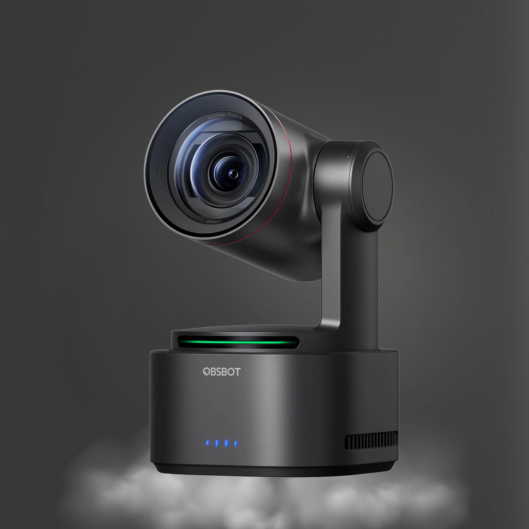
A robotic camera uses motorized movement to pan, tilt, and usually zoom. In professional workflows, these cameras are commonly called PTZ cameras. PTZR models add a rotating camera body or related movement design that supports flexible portrait and landscape production. Many current robotic cameras also use AI subject recognition and tracking to keep a selected person framed without continuous manual control.
That distinction changes the value of each device. A fixed camera gives predictable composition and a simple setup. A robotic camera gives coverage flexibility from a single mounting point. Neither is automatically more professional. A locked wide camera is often the most dependable shot in a live show, while a moving PTZ camera can provide the close-up that makes the program feel intentional rather than distant.
When Fixed Cameras Are the Better Production Tool
Fixed cameras work best when the talent position is known and repeatable. A solo streamer at a desk, a talking-head recording setup, or a podcast host seated at a marked position does not necessarily need pan and tilt movement. In these cases, image quality, lens selection, low-light performance, and clean audio matter more than camera motion.
They are also useful as permanent safety angles. A wide fixed shot can cover an entire stage, conference table, or worship platform even if another camera is tracking an active speaker. During a live switch, that stable view gives the operator a dependable place to cut when an AI-tracked camera is repositioning or a presenter moves unexpectedly.
The operational advantage is simplicity. There are fewer movement presets to program, no tracking mode to configure, and less chance that camera motion becomes visible at the wrong moment. A fixed 4K camera can also be cropped for a secondary HD composition, provided the lighting, lens angle, and output workflow support it. This is a practical option for creators who need a wide master shot and an occasional tighter digital crop in postproduction.
Fixed cameras do have a clear limit: they cannot recover a missed composition on their own. If a guest leans toward a whiteboard, walks to a product display, or joins a seated discussion from the edge of the frame, the camera remains where it is. Solving that problem requires another camera, a wider shot that may feel less engaging, or a person to adjust the equipment.
Where Robotic Cameras Earn Their Cost
Robotic cameras are designed for changing compositions. PTZ control lets an operator move from a wide room shot to a close presenter shot without touching the camera. Presets make the process faster by storing repeatable positions, such as podium, center stage, audience left, audience right, and product demonstration table.
This is especially valuable when one operator is handling multiple responsibilities. A small event team may need to manage audio, graphics, playback, and a video switcher while monitoring camera feeds. In that environment, a robotic camera can reduce the number of people needed at the venue. It does not eliminate the need for production judgment, but it makes professional coverage more achievable with a smaller crew.
AI tracking extends that advantage when the main subject moves frequently. An instructor can walk across a classroom. A presenter can move between a display and a lectern. A fitness creator can remain framed through a workout. Cameras such as OBSBOT AI-powered PTZ and PTZR models are built around this use case, combining 4K capture with intelligent framing and subject-following functions.
The trade-off is that movement must be planned. PTZ motion can look slow or distracting if it occurs during a live close-up. Tracking can also make imperfect choices when multiple people enter the frame, a subject is briefly obscured, or the visual background is busy. The strongest workflow uses presets, tracking zones, and a fixed safety camera rather than depending on automation for every shot.
Image Quality Is Not a Fixed-Camera Advantage by Default
It is easy to assume that fixed cameras always deliver better images because they have fewer mechanical components. That assumption is too broad. Sensor size, lens quality, processing, bitrate, lighting, output resolution, and exposure control have a greater effect on the final image than whether the camera pans.
A well-lit robotic 4K camera can look highly polished in a livestream, particularly when its framing puts the speaker at a useful size in the shot. A fixed camera with poor exposure or an overly wide lens can look less professional even if its specifications appear stronger on paper.
Evaluate image performance in the conditions where the camera will actually operate. For a dim sanctuary or event room, low-light handling and noise performance deserve close attention. For a bright training room, accurate skin tones and window exposure may matter more. For product content, close-focus capability, color consistency, and manual control may be the deciding factors.
Resolution also affects flexibility. A 4K source gives more room for cropping and can preserve detail on large displays. However, 4K does not correct poor framing. A properly positioned HD shot can be more effective than a 4K wide shot where the speaker occupies a small section of the image.
Control, Connectivity, and Switching Change the Decision
The camera itself is only one part of the signal path. Before choosing fixed or robotic equipment, confirm how video will reach your switcher, computer, recorder, or streaming encoder. USB is practical for desktop production and simple conferencing. HDMI is common for direct camera-to-switcher connections. NDI can move video, audio, control, and power-related workflow functions across a network, depending on the equipment and installation design.
For multi-camera productions, robotic cameras become more compelling when they can be controlled from one interface. A controller, compatible software, or network-based PTZ control can recall presets and coordinate multiple cameras without walking around the room. That is useful for corporate communications teams, houses of worship, and event producers operating cameras from a control position.
Consider latency and network capacity before committing to an IP workflow. NDI-enabled production can reduce long cable runs and improve control flexibility, but it requires a network designed for video traffic. A direct HDMI workflow may be more straightforward for a compact studio where cameras and switcher are close together.
Audio should be planned separately. Camera microphones can support reference audio, but they rarely replace a properly selected shotgun, lavalier, conference, or vocal microphone. Clear voice capture often improves perceived production quality more than an additional camera angle. Route reliable audio into the switcher, interface, or mixer, then use camera feeds for the visual story.
A Practical Way to Build the Right Camera Mix
Many productions should not choose only one camera type. A mixed setup covers both certainty and flexibility. Use a fixed camera for the dependable wide shot, then add one robotic camera for speaker close-ups or active demonstrations. For larger spaces, two robotic cameras can cover opposing angles while a fixed wide camera remains available as a safe cut.
Start with the shots your audience needs rather than the feature list. A boardroom presentation may need a presenter close-up, a wide group view, and a product or screen angle. A podcast may need locked individual shots with little need for automated movement. A worship service may require preset positions for pulpit, musicians, and stage center, plus tracking for guest speakers.
Ask four operational questions before purchasing: Does the subject move? Who will operate the cameras? How many distinct shots are needed? How will the video be switched and delivered? The answers usually make the camera choice clearer than a specification comparison alone.
A fixed camera is the right tool when the frame is stable and the goal is straightforward, repeatable image capture. A robotic camera is the right tool when the production needs to follow people, recall multiple compositions, or accomplish more with limited crew. Build around the shots that cannot be missed, then choose the camera control that keeps those shots available when the program goes live.