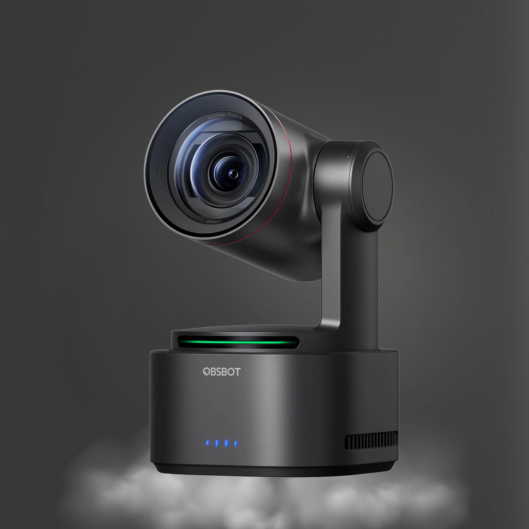
How to Control PTZ Presets in Live Production
A PTZ camera is only as useful as the speed at which you can put it on the right shot. Learning how to control PTZ presets turns repeatable camera positions into one-touch actions, whether you are running a classroom, worship service, podcast, corporate event, or multi-camera livestream. Instead of manually panning, tilting, and zooming between speakers, you can recall a prepared composition at the moment it is needed.
What a PTZ preset stores
A PTZ preset stores a camera position: pan, tilt, and zoom. On many professional cameras, it can also retain related imaging parameters, depending on the model and control platform. The practical result is simple. Preset 1 might be a centered wide shot, preset 2 a tight presenter shot, and preset 3 a podium position.
Presets do not record video or create a transition by themselves. They tell the camera where to move. Your switcher, streaming software, controller, or operator determines when that movement is seen by the audience.
This distinction matters in live production. A camera can move to its next preset while another source is live, then be ready for a clean cut. If the moving camera remains on program, the audience will see every pan, tilt, and zoom movement unless you deliberately want that effect.
How to Control PTZ Presets From Your Workflow
The best control method depends on the number of cameras, the distance from the control position, and how much hands-on operation the production requires. A single creator may be well served by camera software or a mobile control app. A live event with several cameras benefits from a dedicated PTZ controller, network commands, or presets linked to a video switcher.
Use the camera’s software or web control page
Most IP-capable PTZ cameras provide a browser-based control page or desktop application. This is often the fastest way to build presets during initial setup because the interface shows directional controls, zoom adjustment, preset slots, and camera settings together.
Move the camera to the desired composition, set the zoom, then save that position to an unused preset number. Use descriptive labels where supported. “Wide stage” is more useful than “Preset 4,” especially when another operator needs to take control later.
Software control is also practical for remote production. A producer can adjust a camera from another room, provided the camera is on the same network or securely reachable through the organization’s approved network configuration. For critical events, test network responsiveness before show time. A preset that responds late is not operationally reliable, even if the framing itself is correct.
Use a dedicated PTZ controller
A hardware controller gives operators physical buttons, a joystick, and immediate preset recall. This is the preferred method when framing changes are frequent or when one operator is managing multiple cameras. The tactile controls are faster to use than clicking through a software interface, particularly in dark control rooms or fast-moving events.
Start by assigning each camera a clear ID. Then keep preset numbering consistent across the entire system. For example, use preset 1 for wide, preset 2 for medium, preset 3 for tight, and preset 4 for a secondary position on every camera where possible. Consistency reduces operator mistakes when moving between cameras.
Many controllers support preset save and recall functions separately. Confirm which action you are performing before pressing a button. Accidentally overwriting a carefully framed shot during a live event is a common and avoidable failure point. Some teams use a controller configuration that requires a hold-to-save action, which adds a useful layer of protection.
Recall presets through a video switcher or control system
For compact live-production workflows, preset recall can be integrated with a switcher, automation platform, or production-control software. A command can place Camera 2 on the presenter before the switcher takes it live. This reduces manual operation and makes recurring shows more repeatable.
The trade-off is setup complexity. You need to verify device compatibility, network addressing, control protocol support, and command timing. A workflow that works during a quiet rehearsal may fail during a busy event if the network is congested or a camera has received a different IP address.
Where possible, assign static IP addresses or DHCP reservations to production cameras and controllers. Document device names, addresses, preset maps, and control protocols. This is basic infrastructure work, but it prevents rushed troubleshooting when an operator cannot connect to a camera five minutes before a stream.
Set PTZ Presets That Actually Work on Air
A preset should be designed for the final output, not just the room. Open the same monitor, encoder preview, or production multiviewer that your audience will see when saving positions. A frame that looks balanced on a control laptop can appear too wide, off-center, or poorly cropped in the final 16:9 program.
Begin with your essential shots: a wide safety shot, a primary speaker shot, a close shot, and a flexible cutaway position. Then add specialized presets only when they serve a real production purpose, such as a whiteboard, a musician, a panel seat, or a demonstration table.
Avoid building twenty presets simply because the camera supports them. More positions create more selection errors. A smaller set of well-tested shots is usually faster for an operator to execute and easier for a team to document.
Frame for movement, not just stillness
When a presenter moves, a tight preset can become unusable quickly. Leave appropriate headroom and side room based on the subject’s behavior. For a seated podcast host, a tighter frame may remain reliable. For a teacher walking across a stage, a wider camera position or AI tracking may be the better choice.
This is where AI-powered PTZ cameras add a useful option. AI tracking can follow a subject during an active presentation, while presets provide fixed, repeatable compositions for key moments. These are complementary tools, not interchangeable ones. Tracking is useful when the subject moves unpredictably; a preset is better when the shot needs to land on an exact location, such as a podium or product display.
Account for zoom and focus behavior
Zoom affects more than framing. At longer focal lengths, minor camera movement becomes more visible, depth of field becomes less forgiving, and autofocus behavior may change. Test every tight preset under the actual lighting conditions of the room.
If a camera hunts for focus after recalling a close shot, the problem may be insufficient light, low-contrast clothing, reflective glasses, or a focus mode that is not suited to the scene. Correct the imaging condition rather than assuming the preset itself is at fault.
Build a Reliable Preset Recall Routine
Before a live session, recall every preset in sequence and inspect it on program-quality monitoring. Check framing, exposure, white balance, focus, and the route to your switcher or streaming platform. If the camera uses NDI or another network video workflow, verify both video transport and PTZ control, since one can work while the other does not.
For productions with multiple operators, create a simple shot map. It should identify the camera, the preset number, the shot purpose, and any important notes such as “do not take while moving.” Keep it near the controller or within the production rundown.
A disciplined recall routine should also include these operational checks:
- Confirm the correct camera is selected before recalling a preset.
- Move the next camera while another source is live whenever possible.
- Allow enough time for the camera to settle before cutting to it.
- Verify that presets have not been overwritten after a firmware update, reset, or controller reconfiguration.
Troubleshoot Common PTZ Preset Problems
If a preset recalls to the wrong position, first determine whether the camera moved correctly but the framing changed. A bumped tripod mount, shifted wall mount, or changed zoom calibration can make saved coordinates appear inaccurate. Recreate the preset only after confirming that the camera hardware is physically secure.
If the camera does not respond at all, check the selected camera ID, power, network connection, control protocol, and IP configuration. In multi-camera environments, duplicate addresses and incorrect subnet settings are frequent causes of failed control.
If preset movement is delayed, look at network traffic and controller connection quality. Video, audio, computer traffic, and PTZ commands may share the same network infrastructure. A dedicated or properly managed production network provides more predictable control than an overloaded office or guest Wi-Fi network.
For teams building compact but capable production systems, Kong Kei’s camera, switching, and audio categories can support a workflow where camera positions, source switching, and clear voice capture are planned as one system rather than purchased as isolated components.
The strongest PTZ preset workflow is not the one with the most buttons. It is the one that lets an operator place the next useful shot exactly where it belongs, before the audience needs to see it.