Choosing an HDMI SDI Video Switcher for Live Production
A mixed-camera setup usually breaks down at the switcher, not the camera. Your PTZ camera may output HDMI, a broadcast camera may use SDI, and the presentation laptop may need HDMI at a different frame rate. An HDMI SDI video switcher is the control point that lets these sources work in one live program - provided its inputs, processing, and outputs match the actual signals on your production floor.
For livestreamers, event teams, educators, houses of worship, and compact studios, choosing correctly reduces the number of converters, avoids format errors, and keeps the operator focused on the production rather than cable troubleshooting. The right model is not simply the one with the highest input count. It is the one that fits your camera formats, monitoring plan, streaming workflow, and level of control.
What an HDMI SDI Video Switcher Does
A video switcher receives multiple video sources and selects, mixes, or transitions them into a single program output. Depending on the model, it can also provide multiview monitoring, audio mixing, graphics layers, recording, USB webcam output, hardware streaming, or camera control.
HDMI and SDI describe the physical video connection types, but they serve different production needs. HDMI is common on webcams, mirrorless cameras, compact PTZ cameras, computers, and displays. It can carry high-resolution video and embedded audio over a compact connector, but cable runs are usually shorter and connectors are less secure in a mobile production environment.
SDI is designed for professional video transport over 75-ohm BNC cable. The connector locks in place, cable runs can extend much farther, and the format is standard across many broadcast cameras, production monitors, and distribution systems. SDI is often the practical choice when cameras are positioned across a stage, sanctuary, classroom, or event space.
A true mixed-format switcher accepts HDMI and SDI directly. That matters because it eliminates separate converter boxes for every source. Fewer adapters mean fewer power supplies, fewer possible failure points, and a cleaner setup. Still, direct mixed inputs do not automatically solve every compatibility issue. Resolution, frame rate, color format, HDCP protection, and processing limits still matter.
Start With Your Signal Map
Before comparing switcher specifications, write down every source and every destination. This simple step prevents the most common buying mistake: purchasing a switcher based on total inputs while overlooking the connection types needed.
For each source, identify whether it outputs HDMI, 3G-SDI, 6G-SDI, or 12G-SDI; its normal resolution and frame rate; whether audio is embedded; and whether it needs remote camera control. Then list destinations such as a confidence monitor, program monitor, streaming computer, recorder, projector, video wall processor, or external encoder.
A three-camera show can have very different requirements. A creator working at a desk may need two HDMI cameras, one HDMI computer input, USB output to a streaming application, and a single HDMI monitor. A church production may need four SDI camera inputs, HDMI for lyric or presentation playback, SDI program output to an encoder, and an auxiliary output for sanctuary displays. Both are multi-source workflows, but they need different hardware.
Count Inputs With Room to Grow
Buy for the next practical production, not only the current one. If you use three sources today, a four-input unit may be enough for a fixed setup. But it leaves no open input for a playback computer, second presenter, backup camera, or external graphics source.
Extra inputs have value only when they support the connections you need. Four HDMI inputs and one SDI input are not interchangeable with two HDMI and three SDI inputs. If your main cameras are installed at distance, prioritize enough SDI ports first and use HDMI for nearby computers or compact cameras.
Check Video Standards Before You Connect
The label “4K” does not tell the full story. A switcher may accept 4K on certain inputs but produce a 1080p program output. Another may support 4K only at specific frame rates. Some models accept 12G-SDI, while others are limited to 3G-SDI, which is generally used for HD signals up to 1080p60.
Confirm these details for every intended workflow:
- Supported input resolutions and frame rates
- Whether the switcher performs frame synchronization or requires matched sources
- Supported SDI standard: 3G, 6G, or 12G
- 4K input, processing, recording, and output capability
- HDMI support level and HDCP handling
- Output resolution for streaming, monitoring, and recording
HDCP is another frequent problem. Consumer streaming apps, protected media players, and some playback devices can send encrypted HDMI video that production switchers cannot accept. If a laptop source displays a black screen, test it with standard presentation content before assuming the cable or switcher has failed.
Outputs Matter as Much as Inputs
A live production rarely has one destination. Program video may go to an encoder, while an operator needs multiview, talent needs a confidence feed, and the venue needs a separate display signal. Review the output section with the same care used for inputs.
Program outputs carry the finished switched feed. Auxiliary outputs can send an independently selected source to a projector, side screen, teleprompter, recording device, or overflow room. Multiview outputs show all camera sources, preview, program, audio meters, and status information on one monitor. For a solo operator, multiview is often more valuable than one additional input.
Choose SDI outputs for longer runs to encoders and professional monitors. HDMI outputs are convenient for nearby displays and capture devices. If your workflow needs both, avoid assuming one output can be converted without consequences. Converters work, but they add hardware and may complicate resolution management.
Audio, USB, and Streaming Workflow
Many switchers can embed audio from HDMI or SDI sources, accept analog microphone or line-level audio, and mix these feeds into program output. This is useful for compact productions, but a built-in audio mixer does not replace a dedicated audio console in every case.
For a single presenter, podcast-style show, or small classroom stream, direct audio into the switcher can simplify the signal path. For a panel discussion, band, worship service, or corporate event with multiple microphones, route a properly mixed feed from an external audio mixer into the switcher. This gives the audio operator independent control over gain, EQ, dynamics, mix-minus, and monitor mixes.
USB webcam output is particularly useful when the switcher feeds software such as a meeting platform or desktop streaming application. The computer sees the program feed as a webcam source, avoiding a separate capture device. Hardware streaming is useful when you want to send a program directly to a streaming platform without relying on a production computer.
Neither method is automatically better. A computer-based workflow offers more control over overlays, remote guests, and platform-specific tools. Direct hardware streaming can reduce computer load and simplify mobile production. Consider your graphics, recording, network, and backup requirements before choosing.
Switching Control and PTZ Camera Integration
For live work, physical controls affect speed and confidence. Dedicated buttons for preview and program, a transition lever or auto-transition controls, and clear source labeling help operators make accurate cuts under pressure. Touchscreen control can be compact and flexible, but physical buttons are usually faster when a live show changes rapidly.
If you use PTZ cameras, check whether the switcher supports camera control over Ethernet, serial control, or the production network. Video switching and camera control are separate functions. A switcher may receive an SDI or HDMI picture from a PTZ camera without being able to adjust pan, tilt, zoom, focus, presets, or exposure.
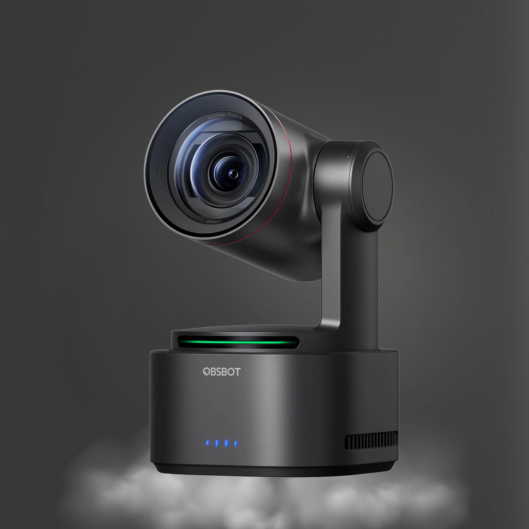
AI-powered PTZ cameras can reduce the need for a dedicated camera operator through subject tracking and automatic framing. They still benefit from a disciplined switching plan. Use locked wide shots for stability, reserve tracked close shots for speakers, and verify that tracking movement does not distract from the program cut. Kong Kei’s integrated camera, switching, and audio categories are particularly relevant for teams building this type of compact multi-camera workflow.
Choose Features Based on the Show
Advanced features are valuable when they solve a recurring production task. Picture-in-picture can keep a presenter visible beside slides. Downstream keyers can place lower thirds or logos over program video. Chroma key tools support virtual sets and weather-style presentations. Still stores and media players can provide standby graphics or countdown screens. Recording can create a fast backup or deliverable copy of the program.
Do not pay for every feature by default. A fixed weekly lecture may prioritize reliable source switching, USB output, and clean audio. A corporate event team may need auxiliary routing, multiple SDI outputs, and presentation support. A creator producing interviews may value multiview, picture-in-picture, and direct recording more than high-end SDI infrastructure.
Also consider redundancy. For revenue-critical broadcasts, use stable power, tested cables, spare media, a backup streaming path where possible, and a documented input map. A higher-spec switcher cannot compensate for an untested laptop, an incorrect camera output setting, or an unstable network connection.
A Practical Purchase Checklist for an HDMI SDI Video Switcher
The most suitable HDMI SDI video switcher is the one that accepts every current source without unnecessary conversion, outputs program to every required destination, and supports the format you plan to deliver. Verify the input mix, SDI standard, frame-rate handling, multiview availability, audio routing, USB or streaming options, and PTZ control before placing an order.
Set up the system at least once before the live event. Label cables, lock the camera output formats, test every transition, and listen to program audio on the final destination. That preparation turns a collection of capable cameras and accessories into a production system your team can operate with confidence.