Portable Live Production Switcher Buying Guide
A two-camera livestream can become difficult the moment the presenter changes position, a remote guest joins, or the operator needs to show slides without interrupting the program feed. A portable live production switcher puts source selection, transitions, audio adjustment, graphics, recording, and streaming control in one compact production hub. For creators, event teams, educators, and corporate AV operators, that can mean a more professional live show without building a full control room.
The right switcher is not simply the model with the highest input count. It must match the cameras, computers, displays, network, and audio equipment already in the workflow. A compact unit that handles your actual signal formats reliably is more valuable than a larger switcher with features that remain unused.
What a Portable Live Production Switcher Does
A live production switcher receives multiple video sources and sends a selected program feed to a destination such as a streaming computer, encoder, projector, recorder, or display. The operator can cut between cameras, add a dissolve or wipe, bring in a presentation, and place graphics or picture-in-picture windows over the live image.
Portability changes where that control can happen. A small switcher can sit on a desk for a podcast, travel in a case for a conference, or run from a compact production station at a house of worship. The benefit is not just physical size. Portable systems reduce cable runs, setup time, and the number of separate devices an operator must manage.
Many models also combine functions that previously required dedicated hardware. Depending on the switcher, this can include multiview monitoring, USB webcam output, direct streaming, recording, chroma keying, still-image playback, audio mixing, and camera control. Those functions are useful, but they should be evaluated as a workflow rather than a feature checklist.
Start With Sources and Signal Formats
Count every source that may be live during a production. A typical setup might use two cameras, a presentation laptop, and a playback computer. A more demanding event may add an audience camera, a confidence feed, a remote caller, and a dedicated graphics source.
HDMI remains common for compact cameras and laptops. SDI is often preferred for longer cable distances and locking connectors in event environments. If your setup requires both, confirm the switcher supports the inputs directly or account for conversion hardware. Adapters can solve a compatibility problem, but every additional converter adds power requirements, cables, and another possible failure point.
Resolution and frame rate are equally important. A 4K camera can still be used in an HD switcher workflow, but the signal may need to be set to an accepted output format. Do not assume that every 4K-labeled device accepts every 4K frame rate. Match the camera output, switcher standard, recording format, and delivery platform before the event, especially when working with 23.98, 25, 29.97, 50, or 59.94 fps workflows.
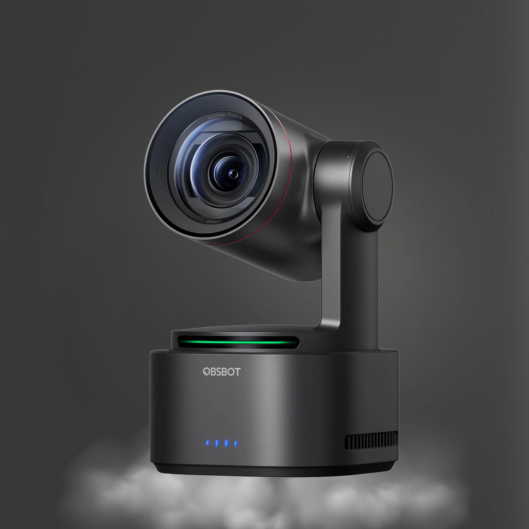
For productions built around AI-powered PTZ or PTZR cameras, verify how video and control travel. A switcher may take HDMI or SDI video while camera movement, presets, and tracking controls operate through Ethernet, USB, serial control, or a separate controller. Keeping those paths clear makes it easier to take advantage of AI Tracking, PTZ positioning, and repeatable framing during a live program.
NDI Can Reduce Cabling, but It Changes the Network Plan
NDI workflows can be highly effective when cameras, control systems, and production computers share a properly designed network. One Ethernet cable can carry video, audio, control, and power in certain camera configurations, which is particularly useful for flexible venues and multi-room production.
However, NDI is not a shortcut around network capacity. Managed gigabit networking, appropriate switches, reliable cabling, and bandwidth planning matter. Some switchers include native NDI capability, while others require an external decoder, encoder, or computer-based production layer. Confirm what is included rather than treating “NDI compatible” as a complete workflow description.
Prioritize Outputs Before You Buy
Inputs get the attention, but outputs determine what the production can deliver. At minimum, most users need a program output for the live stream or recording path and a multiview output for the operator. Without multiview, the team may lose the practical ability to see preview, program, incoming sources, audio meters, and media playback at the same time.
Consider whether the production needs an auxiliary output. An AUX feed can send a different source to a projector, lobby display, confidence monitor, teleprompter, or IMAG screen while the program feed continues independently. This is especially valuable for events where the audience in the room needs something different from viewers online.
USB output is useful for software platforms that recognize the switcher as a webcam. It can simplify a connection to conferencing or streaming software, though the computer still needs sufficient processing power for graphics, remote guests, and local recording. Direct RTMP streaming can reduce reliance on a computer, but it does not eliminate the need for a tested internet connection and a backup plan.
Audio Control Is Part of Video Quality
Viewers will tolerate an imperfect camera angle longer than unclear speech. A portable switcher should fit the audio path, whether that means embedded audio from cameras, a line-level feed from a mixer, or microphones connected directly to the switcher.
For a panel discussion or conference, dedicated microphones and an external mixer often provide the best control. CKMOVA lavalier, shotgun, conference, or vocal microphone options can address different pickup needs before the audio reaches the switcher. The switcher then becomes the point for final level monitoring and audio-follow-video decisions, not the place where poor source audio is expected to be repaired.
Look for level meters, headphone monitoring, mic and line input options, and audio delay controls where available. Audio delay matters when video passes through processing stages or when network sources introduce latency. Even a small lip-sync error can make a polished production feel unreliable.
Decide How Much Automation You Need
A solo operator has different needs from a staffed control position. If one person is presenting and producing, features such as macros, preset layouts, automatic switching triggers, camera presets, and simple touchscreen control can reduce workload. For a three-person crew, direct physical buttons, a clear multiview, and fast access to audio controls may be more useful than deep automation.
Picture-in-picture and downstream keyers deserve practical testing. They are commonly used for lower thirds, speaker names, sponsor graphics, slide overlays, and remote guests. Confirm the switcher can build the layouts you need without consuming critical inputs or forcing compromises in resolution.
Media playback is another area where specifications can be misleading. Check supported image formats, clip codecs, playback resolution, internal storage requirements, and whether a graphic can be updated while another is on air. If branded graphics are central to the show, a dedicated graphics computer may still be the more flexible option.
Build for the Venue, Not Just the Studio
A desktop setup can hide problems that become obvious on location. Portable productions need dependable power distribution, labeled cables, spare HDMI or SDI runs, a stable tripod plan, and enough monitoring for the operator to work quickly. If the switcher uses external power, carry a secured spare power supply when the event matters.
Heat, battery runtime, cable strain, and transport protection also affect selection. The smallest model is not always the most portable after you add converters, chargers, external recorders, and control surfaces. A slightly larger switcher with the necessary I/O can produce a cleaner, faster setup than a minimal unit surrounded by accessories.
Before a live event, run a complete rehearsal at the same resolution and frame rate you will use on site. Test every camera, computer, microphone, graphics source, streaming destination, and record path. Then test failure scenarios: disconnect a source, restart the presentation computer, mute a microphone, and verify that the program output remains under control.
A portable live production switcher should make the production easier to operate under pressure, not merely add features to the equipment list. Choose the unit that matches your real source count, output requirements, control method, and audio path, then leave room for the next camera or presentation feed. That is how a compact setup stays capable as the show grows.