Live Streaming Equipment for Professional Results
A live stream can tolerate an imperfect set, but it rarely survives poor framing, unstable video, or hard-to-understand speech. The right live streaming equipment solves those issues at the source: an intelligent camera keeps the presenter framed, a dedicated microphone captures speech with authority, and a switcher turns several sources into one controlled program feed.
For a solo creator, that may mean a compact 4K webcam and a USB microphone. For an event team, a classroom, a house of worship, or a corporate communications department, it can mean PTZ cameras, NDI networking, multi-camera switching, and dedicated audio capture. The correct configuration depends on the production, but the priority is consistent: build a system that is easy to operate under live conditions.
Start With the Live Streaming Equipment Workflow
Buying individual specifications without defining the workflow often leads to wasted ports, duplicate features, and equipment that cannot be controlled from the same position. Before selecting hardware, establish what the production must do during a real broadcast.
A presenter working alone may need AI tracking to stay centered while demonstrating products, teaching, or moving around a studio. A podcast producer may need two or more close-miked voices and independent camera angles. A church or event producer may need quiet PTZ movement, long cable runs, network distribution, and a switcher that can move between cameras, slides, playback, and graphics without interrupting the program output.
Also decide where the stream is going. A single computer-based feed requires a different setup from a production sending simultaneous horizontal and vertical formats. If the video will pass through a software encoder, make sure the camera output and capture workflow are supported. If the system will operate across a local network, NDI-capable equipment can reduce reliance on direct HDMI runs while making source routing more flexible.
The best live setup is not necessarily the largest one. It is the one that gives the operator fast control of the sources that matter, with enough headroom for future expansion.
Camera Selection: 4K, AI Tracking, and PTZ Control
The camera establishes the perceived quality of the stream before viewers hear a word. Resolution matters, but 4K should be considered more than a number on the product page. A 4K image provides cleaner detail, room for digital reframing, and a stronger result when the final stream is delivered in 1080p. It is especially useful for product demonstrations, wide studio shots, presentations, and recordings that will be repurposed after the live event.
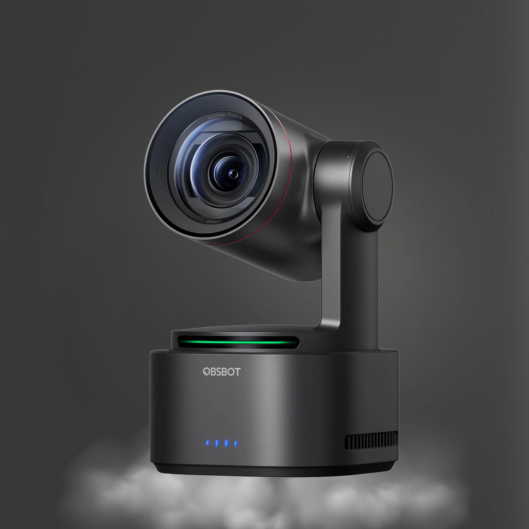
For desk-based creators and remote professionals, an AI-powered webcam can be the most efficient choice. Models such as OBSBOT Tiny 2 are designed for high-resolution video with automatic subject tracking, reducing the need to constantly readjust framing. This is valuable when one person is presenting and operating the stream at the same time. Tracking should be tested in the intended space, however. Very busy backgrounds, several people in frame, or frequent obstructions can require manual framing or clearer tracking zones.
PTZ and PTZR cameras are more appropriate when the camera must be placed away from the operator, mounted in a fixed position, or used as part of a multi-camera environment. Pan, tilt, and zoom control allows a single camera to cover a speaker, audience area, demonstration table, or stage position. Presets are equally important. They let an operator recall repeatable compositions instead of rebuilding a shot manually before every segment.
AI tracking and PTZ control work particularly well together. The camera can follow a moving presenter during an active portion of the program, then return to a preset for a formal interview, podium, or product close-up. That reduces staffing pressure without removing operator control.
Connectivity should guide the final choice. USB is direct and accessible for a single-computer setup. HDMI is common for switcher-based production. NDI versions add network video capability for installations where sources and control positions are separated. Do not choose NDI simply because it is available. It makes the most sense when the network is planned to carry video traffic reliably and the production benefits from distributed routing.
Audio Is the Part Viewers Judge Fastest
A sharp camera image cannot compensate for distant, echoing, or inconsistent speech. Audio equipment should be selected around the microphone’s pickup pattern, placement, and the speaker’s movement rather than appearance alone.
A lavalier microphone is practical when the presenter needs to walk, demonstrate products, or keep the microphone out of the shot. It provides close voice capture, but clothing noise and placement must be managed. A shotgun microphone can work well just outside the frame for seated interviews, presentations, and controlled studio positions. It needs accurate aiming and a room with limited reflective noise. For podcasting, voiceover, and dedicated speaking positions, a vocal microphone offers consistent close-mic sound and better separation from the room.
CKMOVA microphone options cover specialized capture needs, including conference, shotgun, lavalier, and vocal applications. The correct model depends on the sound source. A conference room with several participants may require a boundary or conference-oriented solution, while a single on-camera host is usually better served by a close lavalier or vocal microphone.
Avoid treating audio as a single cable between a microphone and a computer. Gain staging matters. Set input levels high enough for clear speech without clipping loud passages. Monitor with headphones during rehearsals, particularly when using wireless systems, long cable runs, or multiple audio sources. If the production includes music, remote guests, playback, and microphones, a dedicated mixer or audio interface may provide the control that a camera or switcher input alone cannot.
When a Video Switcher Becomes Necessary
A switcher becomes valuable the moment a production needs more than one live source or a cleaner way to manage transitions. It can combine cameras, presentation computers, playback devices, graphics, and other inputs into one program output for the encoder or streaming platform.
For a two-camera interview, switching between a wide shot and speaker close-ups immediately improves pacing. For corporate presentations, a switcher keeps slides and the presenter available without changing cables or relying on screen-sharing workarounds. For live events, it provides a central operating point for camera selection, transition timing, and source monitoring.
CineTreak live video switchers are suited to compact multi-format livestreaming workflows where dedicated hardware control is preferable to handling every task inside a computer. A hardware switcher can reduce CPU demand and give operators tactile access to essential functions. The trade-off is that each switcher has a defined input count, output format, and feature set. Plan for the number of active sources, not just the number required for the first stream.
Consider whether the production requires HDMI inputs, network sources, USB output for a streaming computer, multiview monitoring, audio embedding, or direct recording. These details determine whether the switcher simplifies the setup or becomes the next limitation.
Build for Control, Not Just Connection
Professional results come from predictable control. Label every cable, save camera presets, assign audio channels clearly, and create a startup checklist that covers power, framing, focus, exposure, network status, microphone battery level, and stream destination. These small operational steps matter more during a live broadcast than another unused feature.
Lighting also deserves attention because it changes what the camera can deliver. Even advanced 4K cameras perform better when the subject has controlled, consistent light. Good lighting reduces image noise, improves skin tone reproduction, and allows the camera to maintain a more natural exposure. It is usually more effective to improve the light than to push gain settings higher.
For teams, standardizing control methods is useful. If every operator knows the PTZ preset naming, switcher layout, and audio channel assignment, handoffs become faster and errors become less likely. For solo creators, automation has the same purpose. AI tracking, camera presets, and simple switching workflows keep the operator focused on the content rather than constant correction.
A Practical Upgrade Path
Most creators do not need to purchase a full studio at once. Start by solving the issue viewers notice first. If voice quality is weak, upgrade the microphone and monitoring chain. If the presenter continually leaves the frame, add an AI tracking camera. If the broadcast needs cameras, slides, and playback, add a switcher before adding more isolated devices.
Kong Kei Industrial brings these categories together because camera, switching, and audio decisions affect one another. An OBSBOT AI camera, a CineTreak switching workflow, and a CKMOVA microphone can be selected as parts of one production system rather than separate purchases with unclear compatibility.
The next equipment decision should make the live operator calmer, not busier. Choose the component that removes the most frequent production problem, test it under real broadcast conditions, and build outward only when the workflow asks for more.