Choosing a PTZ Camera for Church Streaming
A missed baptism, an unframed sermon, or a camera operator needed in the sound booth instead of behind a tripod can quickly weaken an otherwise well-produced service. A PTZ camera for church streaming solves a practical staffing problem: it gives one volunteer or technical director control over professional camera angles from a compact position, often while managing lyrics, audio, or switching at the same time.
The right camera is not automatically the one with the highest specification. Sanctuary size, lighting, the number of weekly services, available network infrastructure, and the skill level of volunteers all affect the best choice. Start with the production workflow your church can operate reliably every Sunday, then choose camera features that support it.
Choosing a PTZ Camera for Church Streaming
PTZ means pan, tilt, and zoom. Unlike a fixed webcam or a locked-off mirrorless camera, a PTZ unit can turn across the platform, tilt to frame a choir or baptismal area, and zoom in for a sermon close-up. Preset positions allow an operator to recall these shots immediately instead of manually rebuilding each frame.
For most worship spaces, optical zoom matters more than digital zoom. Optical zoom uses the camera lens to enlarge the image while retaining detail. Digital zoom enlarges pixels from the existing image, which can look soft when projecting a pastor from the back of a long sanctuary. A camera with sufficient optical zoom can be mounted discreetly at the rear of the room while still producing a usable medium and close shot.
Resolution is the next decision. A 1080p workflow remains a sensible choice for churches streaming primarily to social platforms or operating older switchers and displays. However, 4K capture provides more detail, greater flexibility for cropping, and stronger results on large displays and replayed sermons. A 4K PTZ camera also helps when one wide camera must serve multiple compositions in postproduction.
Do not treat 4K as a guarantee of a better livestream. A clean 1080p image with accurate exposure, stable color, and good audio will look more professional than a noisy 4K image in poor lighting. The camera sensor, lens, and processing are as significant as the resolution printed on the box.
AI tracking reduces camera workload
AI tracking is particularly useful in churches with limited volunteers. An AI-powered PTZ camera can follow a pastor as they walk between a lectern, center stage, and communion table. This reduces the need for constant joystick operation and can prevent a speaker from drifting out of frame during a key moment.
Tracking should be treated as an assistive production tool, not an unattended replacement for judgment. It can struggle when several people cross the stage, when a speaker is partially blocked, or when the subject moves into a crowded choir. For a sermon, a locked medium shot with intelligent tracking can be highly effective. For worship music, manual presets are often more predictable because the operator may need to move between vocalist, keyboard, drummer, and congregation views.
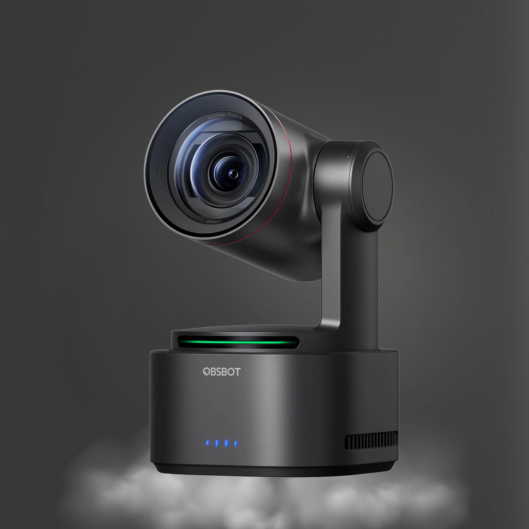
Look for systems that offer fast subject selection, adjustable tracking sensitivity, and manual PTZ override. OBSBOT PTZ and PTZR camera models are designed around AI framing and tracking workflows, which can make them a practical fit where a small team needs more automated camera operation without giving up direct control.
Match connectivity to the control room
A camera is only useful if it connects cleanly to the equipment already in the booth. HDMI is common for short direct runs into a switcher, recorder, or capture device. SDI is generally preferred when cameras are placed farther from the control position because it supports long cable runs and uses locking connectors built for production environments.
NDI is worth considering when the church has a reliable wired network and wants to move video, control, and sometimes audio over Ethernet. An NDI PTZ camera can simplify multi-camera installations by reducing dedicated video cabling. It also supports flexible routing to compatible software, hardware switchers, and production computers.
Network video is not magic, however. It depends on a properly planned network. A shared Wi-Fi connection, unmanaged switch, or overloaded network can introduce dropped frames and delay. For critical services, use wired Ethernet, verify network bandwidth, and coordinate with the person responsible for church IT. Some teams prefer SDI for primary video reliability while using IP control for presets and movement. That hybrid approach is often sensible.
Control options also deserve attention before purchase. A browser-based control page may be enough for a single camera and basic preset setup. Multi-camera worship productions benefit from a dedicated PTZ controller, a compatible joystick, or switcher integration that allows the operator to call presets from the production position. Confirm that the camera, controller, switcher, and chosen protocol work together before building the installation around them.
Plan camera positions before selecting zoom
Camera placement determines whether PTZ movement looks intentional or distracting. The primary camera is commonly positioned at the rear center of the sanctuary, high enough to see over seated attendees and aligned with the platform. This position provides a natural sermon angle and lets the operator create wide, medium, and close compositions without excessive side-to-side movement.
A second PTZ camera can be placed at a front-side angle for worship leaders, musicians, baptismal activity, or a more dimensional view of the speaker. Avoid putting every camera at the same height and distance. If all angles are identical, switching between them adds little visual value.
Before permanently mounting a camera, test the view with temporary placement. Confirm that the zoom reaches the pulpit, lectern, baptismal area, and worship team without placing the camera at maximum zoom all the time. Also check for visual obstructions such as balcony rails, ceiling fixtures, projection screens, and raised hands in the congregation.
Presets should be composed as usable broadcast shots, not merely locations. Build a wide platform view, a medium sermon shot, a close sermon shot, a worship-leader shot, a keyboard or instrument position if needed, and a baptism preset. Set appropriate movement speed for each. A slow, graceful transition may work between worship moments; a quick preset recall is better when switching to a speaker who has already begun talking.
Build a complete church production chain
A PTZ camera improves video, but viewers stay engaged when the full production chain is coordinated. Clear speech is non-negotiable. Use the church's existing PA microphone feeds when possible, but verify the livestream mix independently. A room mix designed for speakers in the sanctuary may have weak vocals, excessive drums, or no ambient sound in the stream.
For interviews, announcements, mobile ministry recordings, or overflow-room production, dedicated audio tools such as CKMOVA lavalier, shotgun, conference, and vocal microphones can fill gaps where a house system is not available. The right pickup pattern and placement matter more than simply adding another microphone.
A video switcher gives the operator a practical way to combine PTZ cameras, presentation slides, lyric sources, prerecorded videos, and lower-thirds. Small teams should favor a workflow with clearly labeled inputs, repeatable scene layouts, and a backup plan for service-critical elements. CineTreak live video switchers can support compact multi-source setups where churches need direct control rather than relying entirely on a computer interface.
Consider latency across the entire chain. A camera image may arrive at the switcher quickly, while a separate audio path passes through processing, USB conversion, or streaming software. Test lip sync during rehearsal, not five minutes before the service. Record a short sample, watch it on the same platform used by remote members, and correct delays at the mixer, switcher, or streaming encoder.
Choose a system volunteers can repeat
The best church streaming system is one that works when the usual technical director is away. Create a one-page operating procedure for powering equipment, selecting presets, checking audio meters, starting the stream, and responding to common issues. Label camera inputs and save preset names that describe the shot, such as “Sermon Medium” rather than “Preset 3.”
Keep an eye on practical support factors as well: stock availability, secure ordering, shipping terms, exchange coverage, and access to technical assistance. For churches buying a connected camera, controller, switcher, and audio setup, compatibility guidance before installation can prevent costly rework.
A PTZ camera should make worship production calmer, not more complicated. Start with stable framing, clear speech, and a workflow your team can run consistently. Once those foundations are in place, AI tracking, 4K capture, NDI networking, and additional camera angles become meaningful upgrades that help remote viewers stay focused on the message.