HDMI Versus SDI Cabling for Live Production
A camera can deliver clean 4K video, accurate AI tracking, and stable PTZ movement, then lose its value at the final connection. The HDMI versus SDI cabling decision determines how far a signal can travel, how securely it stays connected, which switchers it can feed, and how much risk enters a live workflow. For a desktop creator, HDMI is often the direct route. For an event, church, classroom, or multi-camera studio, SDI may remove several common failure points.
The right choice is not about declaring one cable format better than the other. It is about matching camera outputs, cable length, resolution, switching hardware, and the operational demands of the production.
HDMI Versus SDI Cabling: The Core Difference
HDMI is the familiar compact connector used across cameras, monitors, televisions, capture devices, and many entry-level live switchers. It carries high-quality digital video and embedded audio through one cable, making it practical for short camera-to-switcher or computer-to-monitor connections. Modern HDMI versions can support high frame rates, high resolutions, HDR, and other advanced display features.
SDI, or Serial Digital Interface, uses 75-ohm coaxial cable with BNC connectors. It was designed for professional video transport. Its defining benefits are cable reach, connector security, and predictable integration with broadcast-oriented cameras, switchers, recorders, converters, and distribution gear.
The connector matters as much as the signal. A standard HDMI plug relies on friction. It can loosen when a camera is moved, a cable is pulled, or a portable switcher is repositioned. A BNC connector twists and locks into place. That small mechanical advantage is valuable when a production is live and a camera position cannot be interrupted.
When HDMI Is the Better Production Choice
HDMI is efficient when equipment stays close together. A compact streaming desk may place an AI webcam or 4K camera beside a computer, with a monitor and switcher within a few feet. In this layout, HDMI keeps the system simple and avoids the cost and added points of failure of signal converters.
It is also common on creator-focused cameras and compact switchers. If your camera provides HDMI output and your switcher accepts HDMI input, a direct connection is usually the cleanest starting point. Use a certified cable specified for the resolution and frame rate you intend to run. A cable that works at 1080p may not remain stable when the system changes to 4K60.
HDMI is especially useful for short-run applications such as podcast sets, product demonstrations, gaming streams, remote presentations, and small interview studios. The format supports embedded audio, so a camera-mounted microphone or camera audio feed can travel with the picture when that fits the workflow. For serious voice capture, a dedicated CKMOVA microphone connected to the camera, mixer, recorder, or computer still gives more control over pickup pattern, gain, and monitoring.
There are trade-offs. Passive copper HDMI cables become less dependable as distance and signal bandwidth increase. Four meters may be trouble-free in one setup, while a longer run at 4K60 can produce dropouts, intermittent sync, or no image at all. Active HDMI cables, fiber HDMI, extenders, and HDMI-over-Cat solutions can increase reach, but they add compatibility considerations and may require directional installation or external power.
HDMI can also introduce handshake issues. Sources and displays exchange capability information through EDID, and HDCP can complicate workflows involving protected consumer content. In a live production system with cameras, switchers, and professional monitors, HDCP is usually not the central issue, but EDID and format mismatches can still lead to an unexpected black screen.
Why SDI Dominates Longer and Higher-Risk Runs
SDI is built for a camera that sits across a room, at the back of an auditorium, on a stage runway, or in a control-room workflow where cables are routed through floors, walls, and equipment racks. A quality coaxial run can carry video much farther than standard passive HDMI, with the exact distance determined by the SDI data rate and the cable's specification.
The SDI family includes several bandwidth levels. HD-SDI supports 1080-class formats at 1.5G. 3G-SDI supports formats such as 1080p60. 6G-SDI is commonly used for 4K up to 30 frames per second, while 12G-SDI can carry 4K60 over a single cable. These labels are not interchangeable. A 12G camera, switcher, or monitor needs a cable rated to reliably carry a 12G signal at the required distance.
For example, a long cable run that performs well with 3G-SDI may not sustain 12G-SDI 4K60. Cable quality, conductor construction, shielding, connector termination, and routing all affect the result. Do not treat a generic coax cable as a guaranteed 12G cable simply because it has BNC connectors.
SDI also supports professional workflow features that matter in larger systems. Depending on the equipment and format, it can carry embedded audio, timecode, and ancillary data. It is easy to distribute through SDI distribution amplifiers and route through production infrastructure. For multi-camera teams, that means a camera feed can move from the stage to a switcher, then to monitors, recorders, and streaming encoders without relying on several consumer-grade adapters.
SDI is not automatically the correct answer for every setup. The cable is thicker than HDMI, BNC connectors require compatible devices, and 12G infrastructure can cost more. If a small studio uses HDMI-only cameras and an HDMI switcher on the same desk, moving every connection to SDI may solve no real problem.
Match the Cable to the Entire Signal Path
The most common purchasing mistake is choosing a cable based on one device rather than the full chain. Start with the camera output, then verify the switcher input, monitor input, recorder input, and target delivery format. A camera may offer HDMI, SDI, USB, NDI, or a combination of these. Each output supports a different production path.
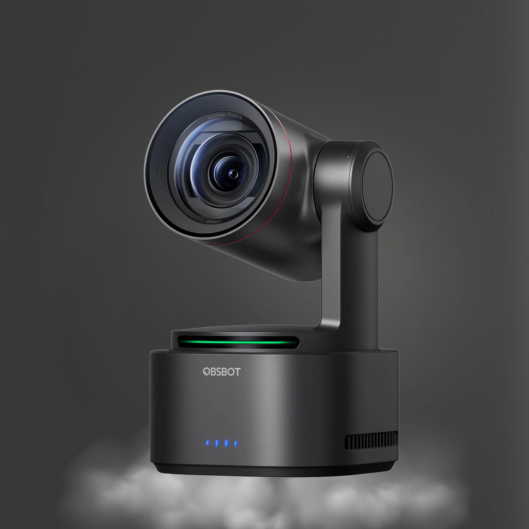
An OBSBOT PTZ or AI tracking camera, for example, may be selected for intelligent framing and 4K imaging, but its physical video output must still match the switcher or capture hardware. If the camera uses HDMI and the switcher has SDI inputs, add a properly specified HDMI-to-SDI converter near the source. If an SDI camera must feed an HDMI monitor, use an SDI-to-HDMI converter at the monitor end. Direction matters. Many converters operate in only one direction.
Avoid unnecessary conversion when possible. Every converter needs power, introduces another physical connection, and creates another item to test before an event. A direct camera-to-switcher path is generally easier to troubleshoot than HDMI to SDI, followed by SDI to HDMI at a monitor.
Network video is a separate consideration. NDI can reduce the need for dedicated video cabling by moving video over a managed network, but it does not make HDMI or SDI irrelevant. HDMI and SDI remain useful for direct low-latency feeds, confidence monitoring, backup paths, and hardware switching. In higher-value productions, a wired SDI path or direct HDMI feed can be a practical fallback when a network configuration changes unexpectedly.
Resolution, Frame Rate, and Cable Specification
Cable labels should match the actual format, not just the camera's maximum resolution. A 4K camera may be configured for 1080p60 for a standard HD stream. In that case, 3G-SDI may be sufficient across the entire path. If the production requires 4K60 acquisition or delivery, confirm that the camera, switcher, recorder, monitor, converter, and SDI cable all support 12G-SDI, or that the HDMI components support the required HDMI bandwidth.
Frame rate also matters. A workflow involving 23.98, 29.97, 50, 59.94, and 60 fps must be planned deliberately. Some switchers accept only a limited set of input formats, while others can scale or convert inputs. Relying on automatic conversion without checking the specifications can introduce latency or prevent a source from locking.
For HDMI, purchase a cable certified for the needed capability rather than selecting by appearance or thickness. For SDI, select genuine 75-ohm broadcast coax with connectors rated for the data rate. Keep spare tested cables in the same format and length range used in the system. A replacement cable should not become a last-minute experiment.
A Practical Choice for Common Setups
For a single-camera desktop stream, HDMI is usually the efficient choice. Keep the run short, secure the cable to the camera cage or desk where possible, and test the final resolution through the exact capture device or switcher you will use.
For a two- to four-camera podcast or interview set in one room, HDMI can still work well when camera positions are close and the switcher is central. If cameras must be placed around a larger studio, SDI becomes more attractive because the cable runs can be longer and the locking BNC connection withstands routine movement.
For live events, worship production, corporate town halls, and education spaces, SDI is often the operational choice. It supports purposeful cable routing from distant cameras to a control position and makes it easier to build a system that can be serviced, expanded, and repeated across events.
Before the next shoot or stream, map each signal from camera to screen, switcher, recorder, and encoder. Choose HDMI where proximity and simplicity make it efficient, choose SDI where distance and connection security matter, and test the complete path at the production format before talent or attendees arrive.