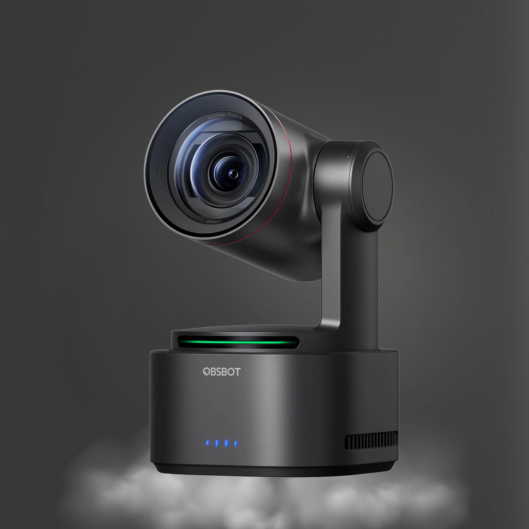
PTZR Cameras for Smarter Live Production
A presenter who turns to address a whiteboard, walks across a stage, then holds up a product can quickly move beyond the limits of a fixed webcam. PTZR cameras are built for this problem: they combine intelligent subject tracking with pan, tilt, zoom, and physical rotation to maintain useful framing without assigning an operator to every camera.
For creators, educators, event teams, and corporate AV departments, the value is not simply that the camera moves. It is that one compact camera can adapt its composition to the person, orientation, and distribution format of the production. Used well, a PTZR workflow reduces repetitive camera work while preserving the control needed for professional live output.
What Makes PTZR Cameras Different?
PTZ stands for pan, tilt, and zoom. A conventional PTZ camera can be repositioned remotely, usually through a controller, software, presets, or network commands. It is a proven format for lecture halls, houses of worship, boardrooms, broadcast sets, and event spaces where one operator may need to control multiple cameras.
PTZR adds a rotating axis. That rotation lets the camera physically change between landscape and portrait orientation rather than creating a vertical crop from a horizontal image. This distinction matters when vertical video is a primary deliverable, not an afterthought. A full-height vertical frame can show a standing speaker, demonstrator, or instructor more naturally while retaining resolution and intentional composition.
The other defining capability in many modern PTZR cameras is AI tracking. Instead of requiring constant joystick input, the camera identifies a selected person and follows their movement. More advanced tracking systems can distinguish a person from the background, respond to gestures, and maintain framing as the subject changes position.
These capabilities solve different problems. PTZ motion gives the operator control. AI tracking reduces manual operation. Rotation supports native vertical production. The right workflow uses each function where it has the clearest advantage rather than assuming automation should replace every camera decision.
Where PTZR Cameras Deliver the Most Value
PTZR cameras are especially effective when a production has one active subject and frequent changes in position or platform. A fitness instructor moving through exercises, a teacher working at a board, a presenter walking a small stage, or a creator filming tutorials can stay on camera without repeatedly stopping to adjust framing.
For livestreaming, a rotating camera also reduces the friction between horizontal and vertical channels. A 16:9 landscape stream may remain the main program for a webinar or YouTube production, while a 9:16 feed supports short-form clips, vertical live platforms, or social-first content. Physical rotation makes it possible to compose for the destination instead of accepting an aggressive crop that cuts off hands, products, or visual aids.
Small production teams gain another operational benefit: a PTZR camera can act as an intelligent secondary angle. The main camera may remain locked on a carefully lit wide shot, while the PTZR unit follows the host for demonstrations, audience interaction, or a closer vertical feed. This creates more coverage without adding another dedicated camera operator.
That said, tracking is not ideal for every shot. A panel discussion with several active speakers, a concert with performers crossing paths, or a stage where people repeatedly pass in front of the subject may need preset recall and manual control. AI follows its selected target, but it cannot always predict a director's preferred composition or editorial timing.
AI Tracking Is a Workflow Tool, Not a Substitute for Planning
The best results begin before the camera is powered on. Tracking performance depends on the shooting environment, the subject's movement, and the framing rules selected in the camera or control software.
Start with a clean tracking area. High contrast between the subject and the background generally helps, while reflective surfaces, crowded rooms, and frequent obstructions can make any tracking system work harder. Give the camera a clear line of sight and avoid placing it where a foreground monitor, microphone boom, or audience member will repeatedly block the subject.
Next, determine how much headroom and lead room the production needs. A speaker who remains in one location can use a tighter tracking frame. A presenter who gestures widely or moves from a desk to a display needs a wider frame and more room in the direction of travel. A camera that tracks too tightly may look active but still fail to capture the information viewers need.
It is also worth defining a manual fallback. For an important live session, save usable PTZ presets for a wide shot, a presenter close-up, a product area, and a display position. If tracking loses the subject or the program needs a deliberate reset, the operator can recall a predictable shot immediately.
Choosing a PTZR Camera for Your Production
Image quality remains the first buying decision. AI movement does not compensate for poor lighting, limited detail, or an unsuitable field of view. For professional livestreams and recorded content, 4K capture provides useful detail and additional flexibility for output and postproduction. It is particularly valuable when the camera will serve both wide landscape and tighter vertical compositions.
Then evaluate how the camera connects to the rest of the system. USB is practical for direct use with a computer and common conferencing or streaming applications. HDMI suits switchers, capture devices, and dedicated video paths. NDI is valuable when the camera will be deployed over a managed network in a multi-camera environment, allowing video, control, and often power-related workflow planning to be centralized around the network infrastructure.
Each option has trade-offs. USB is simple but has cable-length and host-device considerations. HDMI is familiar and low-latency but may require separate control cabling and conversion. NDI can reduce physical video cabling and improve flexibility across rooms, but it requires a properly designed network with sufficient bandwidth and dependable configuration. Do not choose an NDI-capable camera solely for the label if the network is unmanaged or already carrying unpredictable traffic.
Control is the next factor. Verify whether the production needs app control, remote control, direct PTZ controller support, stream deck-style triggers, or integration with video-switching software. For a solo creator, quick access to tracking mode and orientation may be enough. For an AV operator running multiple sources, reliable preset recall and centralized camera control are often more important than one-touch convenience.
Finally, consider the physical placement. Rotation can affect clearance requirements, so confirm that the camera has sufficient space to move freely on its mount. A ceiling, wall, tripod, or desktop position should also account for cable routing, eye line, lighting, and the background seen in both landscape and portrait modes.
Building a Compact PTZR Production System
A PTZR camera becomes more capable when it is treated as part of a complete signal chain. The camera supplies framing and movement, but the final production also depends on switching, audio, monitoring, encoding, and control.
In a creator setup, a PTZR camera may feed a computer by USB or HDMI while a dedicated microphone provides close, controlled voice capture. This separation matters. Viewers will often tolerate a slight framing compromise more easily than room echo, low vocal level, or distracting background noise. A lavalier microphone supports presenters who move, while a shotgun or supercardioid microphone can suit a fixed desk or studio position when placed correctly.
For multi-camera work, combine the PTZR unit with a video switcher and at least one static angle. The static camera provides a dependable safety shot while the PTZR camera handles follow work, alternate framing, or vertical deliverables. Switch between them with purpose: move to the tracking angle when the presenter demonstrates, walks, or interacts with an object; return to the wide shot when the audience needs context.
A networked setup can extend this further. An NDI-enabled camera can be controlled from a production position outside the room, which is useful for corporate training, worship services, classrooms, and event spaces where the operator cannot stay beside the camera. Before going live, test control response, video delay, network load, and recovery behavior after a power or network interruption.
Practical Setup Checks Before You Go Live
A few checks prevent most PTZR camera frustrations. Confirm that the camera rotation matches the streaming platform's orientation. Test tracking through the full range of expected movement, including turns, gestures, and interactions with props. Review the shot on the actual program monitor rather than only in the camera preview, since switcher scaling and platform layouts can change the final composition.
Set exposure, white balance, and focus behavior for the environment before the session starts. Auto settings can be useful in changing conditions, but they may shift visibly when a presenter walks past a bright screen or window. A controlled studio usually benefits from locked or carefully limited settings; a mobile event setup may require more automation.
Also test audio and camera behavior together. If the speaker uses a wireless lavalier, make sure the tracking frame does not become so wide that visual energy drops while the audio remains intimate. If the camera moves during a product demonstration, confirm that focus and exposure transition cleanly enough for viewers to see the item.
Kong Kei Industrial's OBSBOT-focused camera range, along with video switchers and purpose-built microphone options, supports this type of compact production design: intelligent camera movement where it helps, deliberate switching where it matters, and audio selected for the speaker and room.
The most effective PTZR setup is the one that gives your team fewer repetitive corrections without taking away editorial control. Start with the subject's movement, the final viewing orientation, and the signal path you already operate. Then configure tracking, presets, audio, and switching around the shots your audience actually needs to see.