NDI Workflow Guide for Multi-Camera Production
A two-camera show can look simple until one feed drops frames, the switcher cannot find a source, or camera control lags during a live presentation. An NDI workflow guide is not just about connecting cameras to a network. It is about designing a signal path that gives operators predictable video, clear audio, responsive PTZ control, and a practical fallback when conditions change.
For livestreamers, corporate AV teams, houses of worship, educators, and compact production studios, NDI can reduce the amount of SDI cabling and hardware required for a multi-camera room. The trade-off is that the network becomes part of the production system. It must be planned with the same care as camera placement, lighting, and microphone selection.
Start With the Production Requirement
Build the workflow around the program you need to produce, not around the maximum number of devices you can connect. Define the delivery resolution and frame rate first. A 1080p30 corporate webcast has very different network and processing requirements from a 4K60 event stream with multiple camera angles.
Then identify every source and destination. Sources may include AI tracking PTZ cameras, a presenter laptop, playback, graphics, and remote callers. Destinations can include a hardware switcher, production computer, confidence monitor, recorder, livestream encoder, and a second workstation for monitoring.
This step prevents a common mistake: treating one NDI feed as if it is used only once. In practice, the same camera may feed the switcher, multiview, recording system, and a backup computer. NDI makes that distribution possible, but each receiver adds network traffic and decoding work depending on how the system is configured.
Choose NDI High Bandwidth or NDI HX Deliberately
NDI High Bandwidth is typically the better fit when image quality, low delay, and responsive live switching are the priority. It uses substantially more network capacity than NDI HX, particularly at higher resolutions and frame rates. It is well suited to a controlled gigabit production network with managed switching and sufficient computer performance.
NDI HX uses more compression and generally consumes less bandwidth. It can be a practical choice for installations with many sources, Wi-Fi constraints, or cameras designed around efficient network transport. The compromise can be additional latency and more dependency on codec support across cameras, switchers, and software.
Neither format is automatically right. For a speaker-focused webinar, NDI HX may provide all the quality required. For a fast-paced multi-camera production where cuts must closely follow action, High Bandwidth NDI is often easier to operate predictably. Confirm the specific camera, switcher, and software support before committing to either format.
Build the Network Before Adding Cameras
A dedicated wired gigabit network is the starting point for most professional NDI rooms. Connect cameras, switchers, production computers, and storage devices by Ethernet rather than relying on Wi-Fi. Wireless can work for limited monitoring or specific mobile situations, but it should not be the primary transport path for critical live camera feeds.
Use a managed gigabit switch when the system includes multiple NDI sources and receivers. It gives the operator visibility into ports, traffic, power delivery, and configuration options. For larger installations or 4K workflows, uplinks and core connections may need 2.5GbE or 10GbE, especially where several feeds converge on one production workstation.
Power over Ethernet can simplify camera deployment by carrying network and power on one cable. Calculate the total PoE budget, not just the number of available ports. A switch may have eight PoE ports but insufficient total wattage for several PTZ cameras operating at once. Leave headroom for startup load and future expansion.
If the network uses multicast, configure IGMP snooping and a functioning IGMP querier so video traffic is controlled rather than copied to every port. For smaller systems, unicast is often simpler to deploy and troubleshoot. The correct approach depends on the switch, device count, and how widely each source must be distributed.
Keep production traffic separated from general office activity whenever possible. A dedicated VLAN can be appropriate if the network is managed by an experienced IT team. For smaller standalone setups, a physically separate production switch is often the clearest option. It reduces variables when troubleshooting begins five minutes before a live program.
Place Cameras for Both Framing and Control
An NDI camera still needs the same attention to placement as any other production camera. Mount it at an appropriate eye line, verify sightlines, and test its framing at the widest and tightest planned shots. PTZ movement is useful, but a camera placed too far away will force excessive zoom and make image noise, focus behavior, and movement more noticeable.
AI tracking cameras can reduce the staffing burden in presentations, classrooms, worship spaces, and creator studios. The operator should still define a safe tracking area, test how the camera reacts to turns and hand movements, and create presets for key positions. A tracking mode is an automation tool, not a substitute for planned shots.
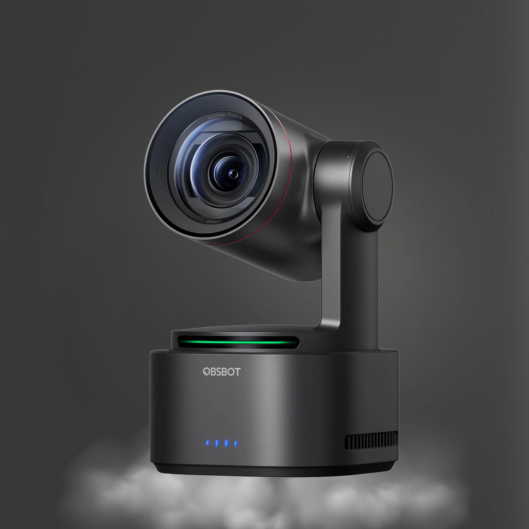
For example, an OBSBOT NDI-version PTZ camera can provide IP video transport alongside AI-based subject framing in a compact setup. Pair it with fixed presets for a podium, audience question area, whiteboard, and wide room view. During a live show, presets provide repeatability while tracking handles natural presenter movement within the selected zone.
Camera control and video transport may be related but are not always the same thing. Verify how each device handles PTZ commands, tally, discovery, and network control. Assign clear device names and static IP addresses or DHCP reservations so a camera remains easy to identify after a power cycle.
Route Audio as a Separate Production Decision
Do not assume camera audio is the best program audio path. A camera-mounted microphone is useful for reference sound and simple calls, but spoken-word production usually benefits from a dedicated microphone and controlled audio chain. A lavalier can keep a presenter intelligible while moving. A shotgun microphone can work for targeted pickup when placement is close enough. Conference and boundary microphones suit different room layouts and participant counts.
Bring primary audio into the switcher, audio interface, or production computer where it can be mixed, monitored, and sent consistently to the program output. Use camera audio as a backup or scratch track if needed. This avoids the distracting result of switching cameras and accidentally changing the room sound, level, or echo profile with every cut.
Set a single timing reference for program audio. Monitor it on headphones at the final output, not only at the microphone receiver. If the video path adds delay, use audio delay controls where available to match speech to lip movement. A short test recording is more useful than judging sync from a live multiview screen.
Switch, Record, and Monitor With a Clear Signal Path
A reliable NDI workflow has one defined program path. Cameras and other sources enter the switcher or production software. The operator creates the program feed. That feed goes to the encoder, streaming platform, display outputs, and recording destination. Avoid unnecessary loops where a program feed returns to a system that already receives it.
Hardware switchers can be effective when an operator needs direct controls, dedicated multiview, and less dependence on a single computer. Software production systems offer flexible graphics, remote contribution, and recording options, but they require enough CPU, GPU, storage speed, and network performance for the full job. The right choice depends on show complexity and the level of operational redundancy required.
Record an isolated camera feed when the event has long-term value, such as training, worship, interviews, or corporate announcements. A clean ISO recording gives editors options if a live cut is late or an unexpected graphic appears. Make sure recording media has enough sustained write speed and capacity for the planned format.
Test Failure Modes Before the Audience Arrives
Preflight should cover more than whether every camera appears in the switcher. Run a short, repeatable test before each important production:
- Confirm each NDI source appears with the correct name, resolution, frame rate, and color settings.
- Check PTZ movement, AI tracking behavior, presets, focus, exposure, and white balance.
- Listen to program audio on headphones and verify microphone batteries or power supplies.
- Watch the final program stream and local recording for dropped frames, sync errors, and encoding overload.
- Confirm a backup plan, such as a second recording path, spare Ethernet cable, alternate camera, or direct HDMI input.
A well-designed NDI production does not need to be complicated. It needs named devices, enough bandwidth, intentional audio routing, practical camera control, and a tested recovery path. Build those foundations first, and adding another camera or destination becomes a controlled upgrade instead of a live-production risk.