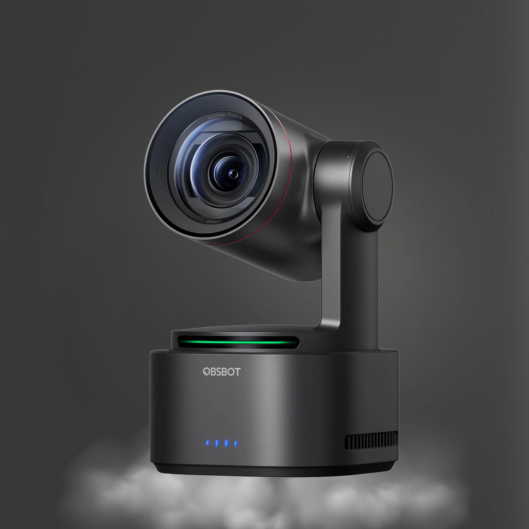
4K Tracking Camera Review for Live Production
A presenter steps away from the desk, turns to a display, then walks back to center frame. With a conventional webcam, that movement usually requires a second person behind the camera or a compromised wide shot. A 4K tracking camera review should begin with that real production problem: can the camera keep a subject properly framed while preserving enough image quality and control for a professional live workflow?
For solo creators, educators, corporate teams, houses of worship, and compact studios, AI tracking cameras reduce the staffing burden of video production. But 4K resolution alone does not guarantee a better result. Tracking accuracy, framing behavior, output options, PTZ movement, low-light performance, and integration with switching and audio equipment determine whether a camera improves the production or creates another point of failure.
How to Evaluate a 4K Tracking Camera
The most useful evaluation separates image specifications from operational performance. A camera can deliver a sharp 4K signal and still be the wrong choice if it loses the speaker at the edge of a stage, moves too abruptly during a presentation, or cannot connect to the production system already in place.
Start with the type of content being produced. A desktop presenter needs close, stable framing and natural face exposure. A fitness instructor, teacher, or worship leader needs a wider tracking area and a camera that reacts predictably to larger movements. A live event operator may prioritize remote PTZ control, network output, and compatibility with a video switcher over automated framing alone.
AI Tracking Is the Main Reason to Buy
AI tracking is valuable when it follows the intended subject without unnecessary reframing. The best systems recognize a person quickly, retain the subject through natural movement, and allow the operator to define the shot behavior. That might mean full-body tracking for demonstrations, upper-body framing for presentations, or close framing for a product explanation.
Tracking speed matters, but faster is not always better. A camera that snaps aggressively from side to side can make a live stream feel less polished than a wider fixed shot. Look for smooth pan, tilt, and zoom transitions, plus the ability to adjust tracking sensitivity or temporarily lock the frame. Gesture controls can be useful for a solo operator, although direct software control remains more precise when the camera is part of a managed production setup.
Subject recognition also needs to match the environment. In a one-person studio, nearly any modern AI camera can provide a major upgrade over a static webcam. In a room with multiple people crossing the frame, similar clothing, or an audience in the background, the camera needs clear subject selection and reliable reacquisition. This is where an AI-focused camera family such as OBSBOT can offer a practical advantage over a standard USB webcam with digital auto-framing.
4K Image Quality Has More Than One Measure
4K provides room to crop, reframe, and deliver a detailed image on large displays. It is especially useful when the camera is feeding a 4K recording, a premium webinar, or a live switcher that benefits from a clean high-resolution source. Yet resolution is only one part of image quality.
Sensor size, lens quality, exposure control, white balance, and noise handling affect the final picture just as much. A well-lit 1080p camera can look more professional than a poorly exposed 4K camera in a dim conference room. Evaluate skin tones under the lighting used for actual productions, not only under bright showroom conditions.
Frame-rate support deserves attention as well. Thirty frames per second works well for meetings, presentations, and many livestreams. Sixty frames per second can produce cleaner motion for demonstrations, sports instruction, energetic stage work, and content that will be slowed down in post-production. Confirm that the selected resolution and frame rate are available through the output connection you plan to use.
Connections Determine the Real Workflow
A camera’s ports and protocols often decide its long-term value. USB is the simplest path for a computer-based stream, video call, or recording session. It is convenient, widely supported, and appropriate for many single-camera setups. The trade-off is cable distance and a workflow centered on one host computer.
HDMI is the stronger choice when a dedicated switcher, encoder, or monitor is part of the system. It gives an operator a direct video path into a multi-camera environment and can simplify live switching for events, worship services, or studio programs. Confirm the camera’s supported HDMI format before planning a 4K signal chain, since not every device, cable, monitor, or switcher accepts every 4K frame rate.
NDI is worth considering for facilities that already use a reliable wired network. It can send video, control, and in some configurations audio over IP infrastructure, reducing the need for long dedicated video runs. NDI workflows are particularly effective for classrooms, corporate studios, and event spaces where cameras may be positioned far from the control desk. The trade-off is network planning: a managed Gigabit network, sensible traffic design, and operator familiarity matter more than they do with a basic USB setup.
Wi-Fi control can add flexibility, but it should not be treated as a substitute for a stable production backbone. For scheduled, client-facing, or revenue-generating streams, wired video and network connections remain the safer choice whenever the installation allows it.
PTZ Movement Versus Digital Cropping
A 4K tracking camera may use physical pan, tilt, and zoom, digital framing, or a combination of both. Each approach has a place.
A PTZ camera can physically follow a presenter across a room, change angle, and use optical zoom to keep the subject large in frame. This is the better design for a stage, classroom, worship platform, or multi-purpose space where the camera must cover a meaningful distance. Presets also let an operator return quickly to repeatable positions such as a lectern, whiteboard, interview chair, or product table.
Digital tracking relies on a wider field of view and crops within the available sensor image. It can be quiet, compact, and highly effective at a desk or in a small room. The limitation is that a digital crop cannot replace physical reach. If the subject is far from the camera, the frame may become less detailed or too wide to feel intentional.
The choice depends on room geometry. If a camera is mounted close to a seated presenter, a compact 4K AI webcam may be all that is needed. If it must cover a speaker moving across a platform, optical zoom and PTZ control are usually worth the additional investment.
Audio Still Carries the Production
Tracking cameras solve framing, not sound. A detailed 4K image paired with room echo or inconsistent voice level still feels amateur. Plan the microphone system at the same time as the camera.
For a desk-based creator, a USB or XLR vocal microphone placed close to the speaker can provide a major clarity improvement. For a presenter who walks and gestures, a wireless lavalier or headset microphone maintains level as the camera tracks movement. Conference rooms may benefit from purpose-built pickup patterns or boundary-style solutions, but microphone placement and room acoustics must be considered before relying on any single device.
When audio is captured separately, verify synchronization in the switching or streaming software. A small delay between voice and picture is more noticeable in a close 4K shot than many operators expect.
Who Benefits Most From a 4K Tracking Camera?
The strongest fit is a production where people move but camera staffing is limited. An instructor can write on a board without leaving frame. A product demonstrator can move between a tabletop and a standing position. A corporate presenter can deliver a webinar without asking a colleague to operate a camera. A small church or studio can cover recurring programs with fewer manual adjustments.
A tracking camera is less necessary when the subject remains seated in one position, the room has a dedicated camera operator, or the output is limited to low-resolution internal calls. In those cases, budget may be better spent on lighting, microphones, or a second fixed camera angle.
Before purchasing, map the full signal path: camera position, subject movement area, lighting, microphone type, connection format, switcher input, streaming platform, and monitoring point. That process often reveals whether a compact USB camera, an HDMI PTZ model, or an NDI-enabled camera is the right category.
Test the Camera Before the First Live Session
Do not judge tracking from a ten-second desktop test. Rehearse the movements that occur during the actual program. Walk to the far edges of the presentation area, turn sideways, hold a product near your face, sit down, stand up, and let another person pass through the background. Watch the result on the same monitor or program feed the audience will see.
Save framing presets where supported, set manual exposure and white balance when lighting is consistent, and test every output at the intended resolution and frame rate. A repeatable setup is more valuable than a camera that looks impressive only under ideal conditions.
The right camera should make the operator think less about keeping people in frame and more about the message, the switch, and the sound. Choose the model that fits the room and workflow, then give it a proper rehearsal before asking it to carry a live production.