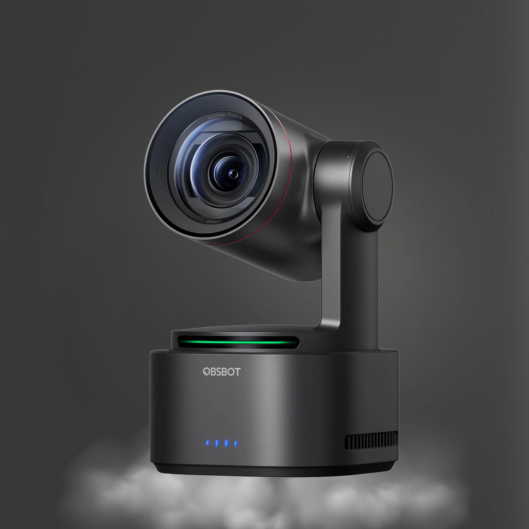
Hong Kong PTZ Cameras for Smarter Live Production
A one-person production fails long before the stream goes live if the presenter walks out of frame, the camera is fixed in the wrong position, or a manual operator is needed for every shot change. Hong Kong PTZ cameras address that operational problem with remote movement, AI subject tracking, high-resolution imaging, and control options built for compact live-production environments.
For creators, educators, corporate AV teams, and event producers, the right PTZ camera is not simply a camera with motors. It is a way to capture more useful angles with less crew, maintain consistent framing, and connect video into the switching or streaming workflow already in use. The correct model depends on how the production is controlled, distributed, and staffed.
What Hong Kong PTZ Cameras Should Deliver
PTZ stands for pan, tilt, and zoom. These functions allow an operator to reposition the camera remotely, recall saved angles, and move from a wide room shot to a close presenter shot without physically touching the unit. In a classroom, conference room, church, or small studio, that flexibility can replace several static cameras when the production does not need every angle simultaneously.
Modern PTZ performance, however, is defined by more than movement. Buyers should assess four connected capabilities: image quality, framing intelligence, connectivity, and control. A camera with 4K output can preserve facial detail and presentation graphics, while optical zoom helps capture a speaker positioned far from the camera. AI tracking can keep a moving subject centered. NDI or IP video can reduce the need for long HDMI runs when the production operates over a managed network.
The trade-off is that each feature places different demands on the system. AI tracking is highly useful for a solo presenter but may need careful configuration in a crowded stage environment. NDI improves networked production flexibility, but the network must be designed to support its bandwidth and reliability requirements. More zoom is valuable in large rooms, while a wider lens may be the better choice for a desk, huddle room, or vertical-content setup.
AI Tracking Changes the Staffing Equation
A conventional PTZ camera still needs someone to choose and execute framing. An AI-powered PTZ camera can recognize a person, follow movement, and adjust framing automatically. That is especially effective for teachers moving across a whiteboard, fitness instructors, product demonstrators, presenters on a small stage, and creators recording alone.
The value is not that AI replaces every camera operator. It reduces repetitive camera work where predictable tracking is more useful than constant creative direction. For a keynote with multiple speakers, audience interactions, and dramatic shot choices, an experienced operator or a multi-camera team still has an advantage. For recurring webinars, tutorials, livestreams, and hybrid meetings, automatic tracking can deliver a more consistent result with fewer hands on the controls.
Products such as OBSBOT AI-powered PTZ and PTZR cameras are designed around this use case, combining tracking with compact camera bodies and creator-focused control. Before selecting a model, determine whether the camera needs to follow a full body, upper body, face, or zone within the frame. Tracking behavior should match the production, not just look impressive in a product specification.
Framing for horizontal, vertical, and hybrid output
Traditional PTZ workflows were built around 16:9 displays and broadcast-style programs. Many teams now need horizontal feeds for YouTube, presentations, or corporate platforms alongside vertical clips and live streams for mobile audiences. A PTZR camera adds rotation to pan, tilt, and zoom, enabling a camera to physically shift between landscape and portrait orientation.
That feature matters when vertical video is a real deliverable rather than an afterthought. Cropping a wide 4K image into a vertical format can work for a stationary subject, but it gives up field of view and can make active tracking less forgiving. Native rotation provides a cleaner vertical composition, particularly for social livestreams, short-form instruction, and product selling.
Select the Video Connection Before Selecting the Camera
The most expensive mistake in a PTZ purchase is choosing a camera without confirming how it will enter the production system. HDMI is direct and familiar, making it a practical option for short cable runs into a switcher, encoder, or capture device. USB is useful for webcams, conferencing platforms, and computer-based streaming. SDI is common in professional environments that require reliable long-distance cabling. NDI and other IP workflows place video on the network, enabling flexible routing to compatible switchers, computers, and production software.
There is no universal best connection. A single-camera webinar from a laptop may benefit most from USB. A church with a control room far from the sanctuary may prefer SDI or NDI. A studio using a live video switcher may need multiple HDMI or SDI inputs, while a distributed corporate environment may prioritize IP control and network video.
For NDI deployments, ask practical questions early: Is the switch gigabit-capable? Is the production network isolated from general office traffic where needed? Are all intended receiving devices compatible with the camera's NDI version? Can the team monitor network performance during a live program? The camera is only one part of an IP workflow.
Control, Presets, and Camera Placement
PTZ movement is most useful when it is repeatable. Presets let operators save positions such as podium close-up, wide stage, audience view, whiteboard, or product table. During live production, recalling a preset is faster and more consistent than manually recreating each position with a joystick or software interface.
Plan the preset list around actual program moments. A presentation may need a walk-on wide shot, a medium speaker shot, and a tight shot for Q&A. A podcast may need individual host angles and a two-person frame. A house of worship may need pulpit, lectern, musicians, and congregation presets. Too many presets can slow an operator down, so prioritize the angles that will be used repeatedly.
Placement affects image quality as much as the camera specification. Mounting a PTZ too high can create an unflattering downward angle; mounting it too far to one side can make direct address feel disconnected. Place the camera near the audience sightline when possible, then test the widest and tightest required framing. Confirm that lighting remains usable throughout pan and tilt positions, especially when presenters move from a lit stage into a darker area.
Build the Camera Into a Complete Production Chain
A PTZ camera produces better programs when the surrounding equipment supports the same workflow. A multi-camera stream needs a switcher that accepts the intended video format and makes source changes predictable. A tracked presenter still needs clear audio, often from a lavalier microphone, headset, wireless system, or carefully placed shotgun microphone. A polished 4K image cannot compensate for distant, echoing, or distorted speech.
For compact production, a practical chain may include an AI PTZ camera, a video switcher, a dedicated microphone, monitoring, and a computer or hardware encoder. Larger systems may add multiple cameras, network control, intercom, recording, and backup power. Kong Kei Industrial brings those related camera, switching, and audio categories together, which is useful when compatibility matters more than buying isolated devices.
Do not treat 4K as an automatic requirement for every job. It provides valuable detail, crop flexibility, and a longer-lived acquisition format, but it also increases storage, processing, and bandwidth considerations. If the final stream is 1080p, a strong 4K camera can still improve the image pipeline, yet the production computer and network need to keep pace.
Questions to Resolve Before Ordering
A well-specified PTZ system starts with the room and the workflow. Identify the farthest subject distance, the required shot types, the available mounting point, and the video path to the switcher or computer. Then determine whether tracking must work autonomously, whether vertical output is required, and who will control presets during the program.
Also confirm power and cable planning. A camera mounted in a ceiling position may need different installation preparation than a desktop unit. Networked models require both a suitable data connection and a clear approach to IP addressing, control access, and firmware management. For live events, build in time to test tracking boundaries, preset transitions, exposure changes, and audio-video synchronization before guests arrive.
The best PTZ camera is the one that removes a real production constraint. Choose it around the shot, signal path, and control method your team will use every week, then give the system a proper rehearsal. That is where intelligent tracking, 4K detail, and remote camera control become dependable production tools rather than unused features.