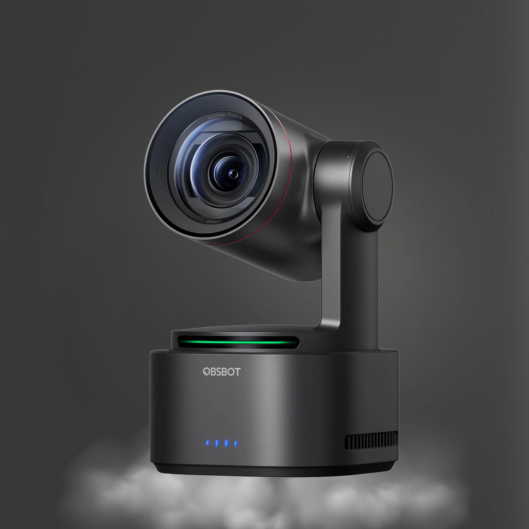
AI Cameras for Smarter Live Video Production
A presenter steps away from the lectern, turns toward a display, then moves back to center frame. With a fixed camera, the operator must reframe manually or accept a shot that no longer works. AI cameras are built for this exact production problem: keeping people properly framed while preserving image quality and reducing the number of routine camera adjustments required during a live session.
For creators, educators, corporate teams, houses of worship, and compact studios, the appeal is not automation for its own sake. It is the ability to deliver a more consistent program with fewer operators, less interruption, and equipment that fits into a practical streaming workflow.
What AI Cameras Actually Do
An AI camera uses image recognition to identify and follow a selected person, group, or presentation subject. The camera analyzes movement in the scene, then controls its own pan, tilt, zoom, or digital crop to maintain framing. Depending on the model and operating mode, it can follow a subject across a stage, keep a seated host centered, or adapt between upper-body and full-body compositions.
This differs from a conventional PTZ camera. A standard PTZ model can pan, tilt, and zoom, but it needs direction from an operator, a preset recall command, or an external control system. An AI-enabled PTZ camera adds an automated framing layer. The operator can still take control when needed, but the camera can handle predictable movement independently.
The result is especially useful when one person is managing switching, graphics, audio, chat moderation, and camera operation at the same time. AI tracking does not replace a skilled camera operator in every setting. It does reduce the burden in productions where staffing is limited and the subject's movement is reasonably predictable.
Where AI Tracking Delivers the Most Value
The strongest use case is a single moving presenter. A trainer walking through a demonstration, a pastor moving across a platform, or an instructor teaching from a whiteboard can stay in frame without constant joystick input. In these situations, tracking turns a static-looking stream into a more intentional production.
For remote presentations and podcasts, automatic framing can be equally valuable. A compact AI webcam or PTZR camera can maintain a natural head-and-shoulders composition as a speaker shifts position. This is more useful than a wide, fixed shot that leaves the subject small in the frame, particularly when the audience is watching on laptops or mobile devices.
Multi-camera productions benefit differently. One AI camera can serve as the moving presenter camera while other cameras cover a wide shot, a product close-up, or a second speaker. A video switcher then lets an operator move between sources without assigning a dedicated person to the tracking camera. This setup is effective for product launches, panel discussions, hybrid events, and smaller broadcast environments.
Tracking has limits. A crowded stage, frequent foreground obstructions, identical-looking subjects, or fast movement outside the camera's pan and tilt range can make any automated system less predictable. A controlled operating area, clear subject separation, and sensible camera placement matter as much as the tracking specification.
AI Cameras, 4K Resolution, and Framing Flexibility
AI intelligence is only one part of camera selection. Resolution, sensor performance, lens coverage, and output format determine whether the tracked image holds up in the final production.
A 4K AI camera provides two major advantages. First, it captures higher detail for 4K delivery, recording, and large displays. Second, it gives more room for digital framing and output conversion. If the final stream is 1080p, a 4K source can still support a tighter digital crop while retaining useful detail. This can be valuable for vertical clips, dual-format streaming, and remote production layouts that need more than one framing option from a single camera.
Optical zoom remains important for larger rooms. Digital cropping cannot replace optical reach when the camera is installed at the back of an auditorium or conference space. A PTZ camera with appropriate optical zoom can capture a close presenter shot from a distance, while AI tracking handles the changes in position. For desktop, small studio, and meeting-room use, a wide lens and intelligent digital framing may be the better fit.
Consider the frame you need before choosing the camera. A close host shot demands different lens coverage than a full-stage presentation. If the camera is too wide for the room, tracking may keep the subject centered but still leave them too small. If it is too tight, the subject can move beyond the usable tracking zone.
Choosing the Right AI Camera Workflow
The right workflow starts with the production output, not with the camera alone. A solo livestreamer may prioritize USB connectivity, compact mounting, 4K video, and automatic framing. A corporate AV team may need SDI, HDMI, Ethernet control, multiple presets, and integration with an existing switcher. A networked production environment may prioritize NDI for video, control, and audio transport over standard Ethernet infrastructure.
USB for Direct Creator Setups
USB is direct and efficient for streaming from a computer. It suits webinars, online teaching, podcast recording, and personal creator studios where the camera connects straight to video conferencing or streaming software. Look for dependable UVC compatibility and confirm the resolution and frame-rate modes supported by your computer and application.
HDMI and SDI for Dedicated Video Systems
HDMI is common in compact switcher-based setups, while SDI is preferred for longer cable runs and professional installations. These outputs allow an AI camera to function as part of a traditional live-production chain, feeding a switcher, recorder, monitor, or converter. The benefit is predictable signal routing and compatibility with dedicated video hardware.
NDI for Networked Production
NDI is valuable when cameras need to operate across a local network rather than through separate video cables. A compatible NDI camera can send video over Ethernet while supporting control and, in many workflows, audio transport. This can reduce cabling complexity in classrooms, event spaces, and studios with multiple camera positions.
Network video requires planning. Your switch capacity, Ethernet cabling, network traffic, and configuration discipline affect reliability. NDI is powerful for multi-camera workflows, but it is not automatically the best choice for a single desktop camera connected beside a laptop.
PTZ Control Still Matters
AI tracking should not be treated as a reason to ignore manual control. The best productions combine automated movement with intentional camera direction. PTZ presets can recall a podium shot, a wide room view, a demonstration area, or a seated interview position in seconds. Manual pan, tilt, and zoom controls remain essential when the camera needs to establish a scene before tracking begins or when the operator wants a specific composition.
This is where PTZR designs can be useful. By combining physical PTZ movement with additional rotational framing capability, they can support horizontal and vertical content workflows more effectively than a camera designed only around a conventional landscape output. For teams producing both livestreams and short-form clips, that flexibility can reduce the need to reposition the entire camera between sessions.
Evaluate how tracking is started and stopped, how quickly the camera responds, and whether you can select the subject or tracking zone. A camera that moves too aggressively can feel distracting on screen. One that responds too slowly can miss the point of a live demonstration. The ideal behavior depends on the pace of the presenter and the visual style of the program.
Build Around the Camera, Not Just With It
A capable camera cannot correct weak audio or disorganized switching. Voice capture should match the room and speaker behavior: a lavalier for mobile presenters, a shotgun microphone for controlled directional pickup, a conference microphone for group discussions, or a vocal microphone for a dedicated host position. Clear speech often improves perceived production quality more than a modest resolution upgrade.
For multi-camera programs, a live video switcher brings the workflow together. It lets the producer cut between the AI-tracked hero shot, a wide angle, presentation content, and remote guests. When the switcher, camera control, and audio chain are selected as one system, teams can operate with greater consistency and fewer last-minute workarounds.
Kong Kei Industrial curates OBSBOT AI camera options alongside professional switchers and specialized CKMOVA microphones because these components are most effective when their roles are planned together. Match the camera output to the switcher inputs, confirm the control method, and choose microphones for the actual pickup environment rather than the product category alone.
Before purchasing, test the intended camera position on paper: measure the subject area, note the distance to the camera, identify available cable paths, and define who will control the production. Those practical decisions determine whether AI tracking becomes a useful production operator or simply an impressive feature left unused.