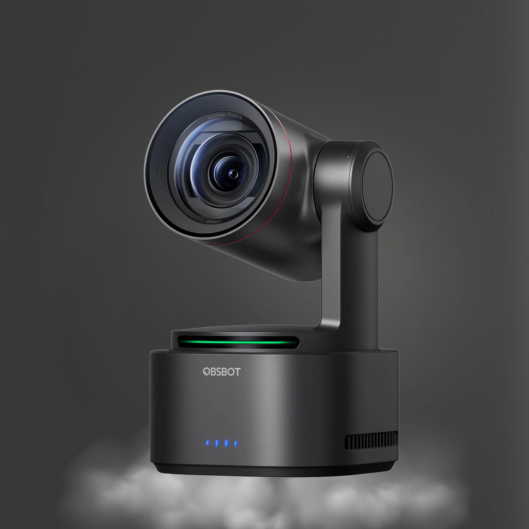
Choosing an Animal Tracking Camera for Streaming
A fixed wide shot can show a nest box, aquarium, kennel, stable, or wildlife enclosure, but it rarely produces a watchable live program on its own. An animal tracking camera for streaming needs to keep unpredictable movement in frame while maintaining a stable picture, usable exposure, and a reliable connection to the production system.
That requirement changes the buying decision. Many AI cameras are designed primarily to identify and follow people, where faces, bodies, and presentation gestures are relatively consistent. Animals move lower to the ground, change direction quickly, disappear behind cover, and may have patterns or lighting conditions that challenge automatic recognition. The right system is therefore not just a camera with an AI label. It is a camera workflow built around tracking behavior, field of view, PTZ movement, control, audio, and a practical backup shot.
Start With the Type of Animal Stream
An indoor pet stream and an outdoor wildlife stream require different priorities. For a cat room, veterinary teaching setup, or animal shelter, reliable power, controlled lighting, and a nearby network make compact 4K cameras with AI framing especially practical. The operator can use a wider shot and apply intelligent framing when an animal moves through the activity area.
For a bird feeder, farm, stable, or wildlife habitat, the environment becomes the limiting factor. Distance, low light, rain protection, heat, changing daylight, and intermittent network coverage can matter more than 4K resolution alone. A camera may capture an excellent image at noon yet become ineffective at dawn, which is often when viewers expect the most activity.
Before choosing equipment, define whether the stream needs to follow one animal, cover an active zone, or cut between several locations. Following one animal calls for the strongest tracking and PTZ control available. Covering a zone often benefits more from a high-resolution wide camera. Multiple locations require switching and a repeatable control workflow rather than asking one camera to do every job.
What AI Tracking Can and Cannot Do
AI tracking is useful because it reduces the number of manual camera adjustments during a live stream. A camera with pan, tilt, and zoom movement can reframe a subject without a dedicated camera operator. In a controlled indoor setting, this can keep a dog in a training area or a pet in a demonstration space better framed than a fixed webcam.
However, do not assume that human-oriented AI tracking will identify every animal with the same confidence. A small animal against a busy background, a dark-coated dog in a dim room, or a bird moving rapidly between branches can cause the camera to lose its target. The camera may also react to a person entering the scene, depending on its tracking mode and configuration.
The production-safe approach is to use tracking as an assistive capability, not the only shot plan. Keep a wide master camera active, define a clean tracking zone, and limit visual clutter where possible. If the tracked camera loses its subject, switch to the wide angle while an operator recenters the moving camera. That small amount of redundancy makes the stream look intentional instead of automated and unstable.
Framing Modes Matter More Than a Feature Label
Look for camera settings that allow fixed framing, manual PTZ positioning, preset recall, and adjustable tracking behavior. Presets are especially valuable in animal streaming. An operator can save a feeder close-up, a wide habitat view, a water station angle, and an entry point, then recall each position immediately.
Automatic framing should also be tested at the distance where the animal will actually appear. A camera may track well at desk distance but behave differently when the subject occupies only a small portion of a large enclosure. Test the setup with real movement, not just a person standing in the center of the frame.
Choose Image Quality for the Viewing Environment
4K capture gives a production team more options. It provides detail for close viewing, supports cleaner digital crops, and improves flexibility when the final output includes both horizontal and vertical formats. For a live animal stream, this is useful when the camera needs to stay wide enough to avoid losing the subject while the production switcher creates a tighter crop for the audience.
Resolution is only one part of image quality. A bright outdoor scene can create hard shadows under trees, while a stable or indoor enclosure may mix window daylight with artificial lighting. Prioritize cameras that give the operator control over exposure, white balance, and image settings. Automatic exposure is convenient, but it can visibly shift when a white animal walks across a dark background or sunlight enters the frame.
Low-light performance deserves a separate test. More light usually delivers a better result than pushing camera gain, which can add noise and reduce detail. For indoor streams, use soft, even illumination outside the animal's direct eye line. For outdoor installations, plan the stream around realistic light levels rather than expecting a standard production camera to replace a purpose-built night-vision system.
PTZ Movement and Zoom Define the Usable Coverage
A PTZ camera is often the most efficient format for a supervised animal stream. Pan, tilt, and optical zoom allow one camera position to cover several points of interest without physically moving equipment. This is particularly effective for training facilities, livestock monitoring with a live presenter, aquariums, and controlled exhibits.
Optical zoom is preferable when the camera must produce a close view from a distance. Digital zoom enlarges the image but cannot create new detail. At the same time, more zoom is not always better. A tightly zoomed camera has a narrow field of view, so fast animals can leave frame before the PTZ system can respond. A moderate shot with enough space around the subject often looks more professional and is easier to manage.
Evaluate PTZ speed as well as zoom range. Quick movement can help recover a subject, but abrupt pans may be distracting for viewers. The best result is usually a controlled camera speed combined with presets placed at predictable activity points.
Build the Streaming Workflow Around Reliable Outputs
The camera must connect cleanly to the rest of the production chain. USB is practical for a single-camera desktop or small-room stream. HDMI works well when the camera feeds a capture device or live video switcher. NDI is valuable when cameras are distributed across a reliable local network, allowing video, audio, control, and power planning to be organized with fewer dedicated video cables in some installations.
For multi-camera programs, use a switcher to combine a wide master shot, a PTZ close-up, an overhead view, and presenter footage. This gives the operator a place to cut when an animal moves unexpectedly or when AI tracking needs a moment to recover. It also improves the viewing experience: audiences can see the full habitat before moving to detail shots of feeding, handling, training, or interaction.
Control is equally important. A production team should be able to recall PTZ presets, adjust framing, and monitor each source without interrupting the broadcast. For regular scheduled streams, document the camera positions and settings so the setup can be repeated by another operator.
Audio Is Not an Afterthought
Animal sounds can add context, but uncontrolled audio can quickly become distracting. Ventilation systems, water pumps, crowd noise, wind, and room echo may be louder than the animal itself. Select microphones based on the pickup area: a shotgun microphone can focus on a specific zone, while a carefully placed lavalier or vocal microphone may be better for an on-camera host or trainer.
Avoid placing microphones where animals can reach cables or create handling noise. In outdoor environments, wind protection and secure mounting are essential. If the stream includes commentary, keep the host microphone separate from ambient audio so levels can be mixed independently. Clear narration and controlled natural sound are more useful than a single microphone trying to capture everything.
A Practical Camera Plan for Consistent Streams
For most live animal productions, the strongest layout uses three visual roles: a fixed wide camera that never loses the habitat, a PTZ camera for directed close-ups and AI-assisted framing, and an optional detail camera for feeding stations, nests, or training equipment. A switcher turns those sources into a controlled program feed, while separate microphones handle host speech and environmental sound.
This approach also makes maintenance easier. The wide camera remains the reliable fallback when a PTZ camera is being repositioned, when tracking fails, or when a lens needs cleaning. It reduces the pressure on automation and lets operators use AI where it adds value rather than expecting it to solve every framing decision.
Kong Kei Industrial’s camera, switching, and microphone categories are suited to this kind of integrated build: intelligent camera control for movement, 4K imaging for detail, and dedicated production tools for a more dependable live output. Start with the environment and shot plan, then select the camera features that support them. The most effective animal stream is not the one with the most automation - it is the one that stays clear, composed, and ready when the animal finally does something worth watching.