AI Camera Automation Trends for Leaner Live Teams
A one-person producer running camera, switching, graphics, chat moderation, and audio cannot afford to spend a live stream manually reframing every speaker. That operational pressure is driving the most useful AI camera automation trends: systems that keep subjects framed, move cameras predictably, and reduce repetitive control tasks without lowering production standards.
For creators, corporate AV teams, educators, and event producers, the change is not about replacing an experienced camera operator in every setting. It is about applying intelligent automation where it produces a measurable benefit: faster setup, fewer missed moments, more consistent framing, and a smaller crew requirement for repeatable productions.
Why AI Camera Automation Matters in Live Production
Modern audiences expect movement, clean framing, and clear image quality even from compact production teams. A static webcam can work for a single presenter at a desk, but it becomes limiting when a presenter moves, a guest enters the frame, or a training session alternates between people and demonstrations.
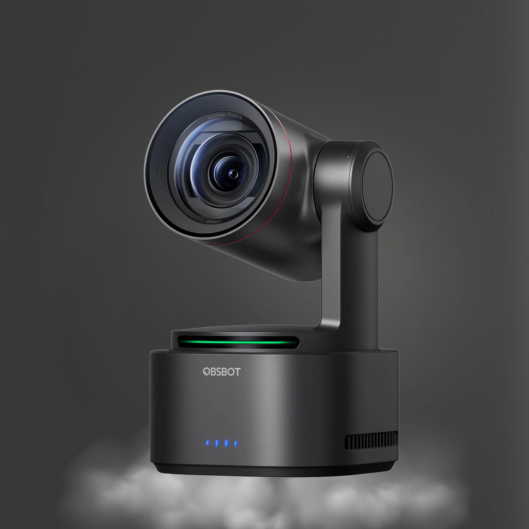
AI-enabled PTZ and PTZR cameras address that gap by combining optical or digital camera control with subject recognition. Instead of using a fixed wide shot to avoid losing the speaker, a production team can use tighter framing and let the camera follow the subject within defined movement limits. The result can look more intentional while reducing the number of manual corrections required during a session.
The trade-off is straightforward. Automation performs best in controlled environments with identifiable subjects, adequate lighting, and a clear camera position. Fast-moving sports, crowded stages, overlapping presenters, and unpredictable audience interaction still benefit from an operator who can anticipate the next shot rather than react to it.
AI Camera Automation Trends Shaping Equipment Decisions
Tracking is becoming more composition-aware
Basic auto-tracking follows a face or body. The newer expectation is more refined: keep the subject at a usable size, preserve headroom, avoid abrupt reframing, and recover quickly if the subject briefly turns away or moves behind an object. This is where features marketed as AI Tracking 2.0 and similar systems matter more than a generic claim of “auto follow.”
For a solo educator, composition-aware tracking means walking to a whiteboard without becoming a small figure in a wide frame. For a presenter, it can maintain a medium shot while leaving room for hand gestures. The best configuration is rarely the most aggressive tracking mode. A slightly slower response often creates smoother, more natural movement and prevents the camera from chasing every small shift in posture.
When evaluating a camera, test whether tracking can be tuned for speed, framing zone, and target selection. A camera that tracks accurately but offers no control over its behavior may be less useful in a real live workflow than one with adjustable presets and tracking boundaries.
PTZR cameras are built for vertical and horizontal delivery
Vertical video is no longer limited to short-form clips. Brands, churches, educators, and streamers increasingly distribute a live program in both landscape and portrait formats. PTZR camera designs - PTZ cameras with physical rotation - are becoming more relevant because they preserve sensor coverage and subject framing when the production changes orientation.
This matters when one camera must serve multiple outputs. A conventional landscape camera can crop into a vertical image, but aggressive cropping reduces the usable field of view and can make a moving subject harder to retain. A PTZR workflow gives operators a more purposeful vertical composition for mobile-first channels, social broadcasts, and remote interviews.
The practical question is not whether vertical streaming is popular. It is whether your team needs simultaneous outputs or regularly repurposes a live program. If the answer is yes, rotation capability and vertical presets can remove a recurring framing problem at the source.
NDI is turning camera control into a network workflow
Network-connected production is another major trend. NDI-capable cameras can carry video, audio, control, and power considerations through a more centralized infrastructure, depending on the specific setup and network design. For multi-camera rooms, this can reduce cable complexity and allow cameras to be positioned farther from the switcher or control station.
Automation benefits because camera presets, PTZ commands, and video feeds can be managed from connected production tools rather than only at the camera location. A corporate communications team can build repeatable scenes for a briefing room: podium close-up, wide stage shot, audience view, and seated interview position. Once stored and tested, those positions are available to the operator without manually rebuilding each shot.
NDI is not automatically the right answer for every creator. It requires a network that can support the bandwidth, appropriate configuration, and disciplined troubleshooting. For a single-camera desktop studio, USB may remain faster to deploy. For a studio, venue, or organization adding cameras over time, NDI can create a more scalable control path.
Automated cameras work best when paired with switching logic
Camera movement alone does not make a live production feel coordinated. The next layer is the relationship between intelligent cameras and live video switchers. A switcher can organize camera sources, presentation inputs, graphics, playback, and streaming outputs while the cameras handle framing and movement.
The valuable trend is not fully unattended switching. It is assisted operation. Operators can recall camera presets before taking a source live, prepare a close-up while another angle is on program, and use multiview monitoring to verify framing before a transition. This creates a controlled rhythm that a single producer can manage more confidently.
For small teams, prioritize compatibility and operational clarity over a long feature list. Confirm the video formats supported by the cameras and switcher, the number of available inputs, the monitoring layout, audio embedding requirements, and whether the production needs multiformat livestreaming. A powerful switcher cannot compensate for a workflow that is difficult to operate under pressure.
Gesture and voice controls are useful, but not universal
Hands-free controls are gaining attention because they can help a presenter start or stop tracking, select a subject, or trigger a command without stepping to a control computer. In a personal studio, teaching environment, or remote presentation room, this can be genuinely useful.
But gesture control is sensitive to room layout and user behavior. A presenter who naturally uses large hand movements may trigger unwanted actions if the system is poorly configured. Voice control can also be impractical in a loud event space or an environment where spoken commands could be picked up on program audio.
Treat these controls as workflow accelerators, not as the foundation of the system. Physical controls, software control, and preset recall should remain available when the automated interface is not appropriate.
Build Around the Production Constraint, Not the Feature List
The right AI camera setup begins with the task that consumes the most operator attention. If a host frequently leaves the desk, tracking quality is the priority. If the room has multiple presentation zones, PTZ presets and reliable recall matter more. If the production uses several cameras across a larger space, NDI connectivity and centralized control may justify the added network planning.
Image requirements should remain part of the decision. 4K capture provides flexibility for recording, cropping, and future delivery, but it also affects storage, bandwidth, and the rest of the signal chain. A 4K camera delivering a poorly lit image will not outperform a well-positioned camera with controlled lighting and a clean production path.
Audio deserves equal attention. A tracked camera can keep a speaker visible, but viewers will tolerate imperfect framing more readily than unclear speech. Choose microphone pickup patterns based on the room and application: a lavalier for a moving presenter, a shotgun microphone for directional capture, or a conference microphone for a table-based discussion. Camera automation and audio capture should be planned as one production system, not purchased as separate upgrades.
Keep a Human in the Control Loop
Automation is strongest when it handles predictable tasks and leaves editorial judgment to the operator. A camera can identify a person, but it does not understand whether that person should be on screen during a sensitive conversation, a panel handoff, or an unplanned interruption. It also cannot fully judge whether a wide shot better communicates the scale of a room or whether a close-up is too intrusive.
Build fallback options into every live setup. Save manual PTZ presets, establish a reliable wide safety shot, and test tracking behavior before the event begins. If the workflow includes network cameras, confirm control response and video stability under realistic load rather than assuming a successful bench test will carry over to a live venue.
The practical goal is not a camera that operates without people. It is a production system that lets a smaller team make better decisions at the moments that viewers actually notice. For teams assembling that system, Kong Kei’s mix of AI cameras, live switchers, and purpose-built microphones supports a more connected path from capture to program output.
As AI camera automation becomes more capable, the winning setups will be the ones that remain simple to operate: intentional presets, dependable audio, a clear control plan, and enough human oversight to make every automated shot feel deliberate.