How AI Tracking Accuracy Keeps Presenters Framed
A presenter steps from the lectern to a whiteboard, turns toward the audience, then returns to center. AI tracking accuracy determines whether the camera follows that movement with useful framing or turns a polished presentation into an avoidable distraction. For livestreams, remote training, worship services, product demonstrations, and corporate broadcasts, tracking is not a novelty feature. It is a practical way to maintain camera coverage with fewer operators.
The best results come from treating AI tracking as part of the production system, not as a setting to activate and forget. Camera placement, subject distance, lighting, background activity, movement style, and output workflow all affect what the camera can recognize and how naturally it can reframe.
What AI Tracking Accuracy Actually Measures
A tracking camera does more than detect that a person exists in the image. It must identify the intended subject, retain that subject through motion or partial obstruction, and adjust pan, tilt, zoom, or digital framing without losing a usable composition. Accuracy is therefore a combination of detection reliability, subject persistence, framing decisions, and movement response.
A system can detect a face correctly yet still produce poor production results if it zooms too tightly, reacts late, or repeatedly shifts toward another person entering the shot. Conversely, a camera may briefly hesitate while a subject turns away, but remain more useful overall because it preserves a stable medium shot rather than making abrupt corrections.
For a single presenter, the goal is generally consistent headroom, enough space for natural gestures, and minimal visible camera hunting. For an instructor using a board or a fitness creator demonstrating full-body movement, the preferred framing changes. Accuracy should be judged against the intended shot, not only against whether the camera has found a human face.
The Inputs That Affect AI Tracking Accuracy
AI models operate on visual information. Better source information usually produces more dependable tracking, while difficult scenes require more deliberate setup.
Subject size and camera position
A subject that occupies too few pixels is harder to identify and frame consistently. Positioning the camera excessively far away may create a wide room view, but it gives the tracking system less visual detail to work with. Moving the camera closer and using a wider framing mode can often produce better results than relying on aggressive zoom from the back of the room.
Camera height also matters. A camera placed near eye level produces a more natural perspective and gives face-based tracking a clearer view. High mounting positions can be necessary in auditoriums or houses of worship, but test the angle with the presenter looking down, turning sideways, and moving across the stage.
Lighting and exposure
Tracking can suffer when the subject is strongly backlit, underexposed, or crossed by changing stage lights. A bright window behind a speaker can reduce facial detail even when the image looks acceptable on a small monitoring screen. Add front light, control window light, or adjust the presentation position when possible.
Automatic exposure can also create variation during a presentation. If a screen, slide, or large bright object enters the frame, the camera may darken the speaker. Manual exposure settings are often the better choice for controlled rooms, especially where consistent tracking and matching across multiple cameras matter.
Background activity and similar subjects
A quiet background makes subject selection easier. Busy walkways, audience seating close to the stage, mirrors, posters with faces, and large displays showing people can all complicate detection. In a panel discussion, the intended behavior may be to track one host, frame the group, or switch between speakers. Those are different production decisions, not a single universal tracking mode.
Where the camera supports target selection, gesture control, or software-based subject assignment, define the target before the program begins. This is more reliable than expecting the camera to infer editorial intent from a crowded scene.
Movement speed and obstruction
Most tracking systems can follow normal walking, presenting, and conversational gestures effectively. Fast lateral movement, sudden direction changes, spinning, or a subject disappearing behind equipment can introduce delay or temporary target loss. A PTZ camera also has physical movement limits: motors need time to pan, tilt, and zoom into a new position.
For energetic content, give the camera a clear viewing angle and leave extra space around the performance area. It is better to maintain a slightly wider stable shot than to demand tight framing that cannot keep up with the action.
Framing Logic Matters as Much as Detection
A camera may recognize a presenter perfectly but make choices that do not suit the program. This is why framing modes and tracking zones deserve the same attention as resolution, sensor size, or video output.
A close upper-body shot works well for a keynote speaker or desktop product review. It is less suitable for a teacher writing equations, a musician playing an instrument, or a presenter using large hand gestures. Full-body tracking can preserve context for exercise instruction and stage performance, although it naturally shows more of the room.
Set a framing style based on the job, then evaluate it in motion. Ask whether the frame leaves space in the direction the presenter is facing, whether it preserves the demonstration area, and whether reframing is slow enough to avoid distracting viewers. The most technically active tracking mode is not always the best-looking one.
Configure the Room Before Going Live
A repeatable test process prevents most tracking surprises. Begin with the actual camera position, lighting, backdrop, and presentation furniture. A quick test in an empty room does not reveal what happens when a second speaker walks behind the presenter or when the projection screen turns bright white.
Run through the movements that matter: entering the frame, walking from one presentation mark to another, turning toward a display, holding a product close to the camera, and standing briefly behind a lectern. Watch both the camera preview and the final program output. Small tracking corrections that appear acceptable in a preview may become obvious when shown full-screen.
If the camera offers adjustable tracking sensitivity, speed, or zoom behavior, change one setting at a time. Fast response may suit an active presenter, but it can also create constant micro-adjustments. A slower setting can look more intentional for executive communication or a seated podcast. Record short test clips and compare them on the display viewers will actually use.
Integrate Tracking Into a Multi-Camera Workflow
AI tracking is particularly valuable when it covers the unpredictable shot while other cameras hold planned compositions. For example, a tracked PTZ camera can follow the main presenter while a fixed camera remains on a wide stage view and another captures slides, a product table, or a co-host. A video switcher then gives the operator a controlled way to cut away if tracking is temporarily unsuitable.
This approach avoids placing every visual decision on one automated camera. It also creates useful redundancy. If the tracked camera needs to reposition after the subject moves, switch briefly to a wide shot rather than showing a fast pan in program.
Networked production adds another consideration. NDI-enabled cameras can simplify routing across a local network, but network capacity, switch configuration, video format, and latency must be planned before the event. AI tracking performance may be excellent at the camera, yet the audience experience will still suffer if the signal path is unstable. Confirm each source in the switcher, recording system, and streaming encoder at the intended resolution and frame rate.
When Manual Control Is the Better Choice
AI tracking is not the right mode for every shot. A scripted interview may need a locked two-shot. A formal worship service may require preset positions for the pulpit, choir, and wide sanctuary view. A live sports or event production with several active people may benefit from a dedicated camera operator who can follow the editorial priority rather than the nearest recognizable subject.
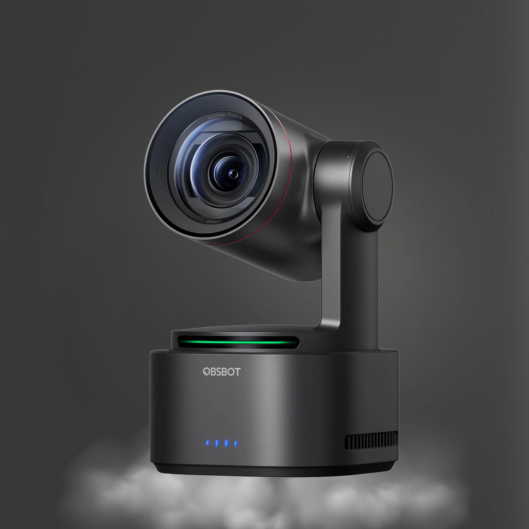
Manual PTZ control and presets remain essential tools. The strongest workflows use automation for repeatable tasks and human control where context changes quickly. An OBSBOT AI-powered PTZ camera can reduce operator workload for one-person productions, while presets and a switcher provide the control needed when the program becomes more complex.
Evaluate Results by Audience Impact
Do not judge tracking only by technical success rates. Review a complete recording and look for viewer-facing issues: clipped hands, excessive empty space, visible camera corrections, missed demonstrations, or attention shifting to the wrong person. These are the failures that affect perceived production quality.
Also consider audio. Clear voice capture from a properly selected lavalier, headset, shotgun, or conference microphone makes minor framing imperfections easier for viewers to tolerate. Poor audio does the opposite: it magnifies every visual flaw and makes a remote presentation feel less controlled.
The practical target is not perfect motion in every possible scene. It is dependable framing for the movements your production actually requires. Build the shot around the presenter, test it under real conditions, and keep a wide-angle or preset-based backup ready. That preparation gives AI tracking the conditions it needs to do useful work while keeping the final program under your control.