How to Choose a Hong Kong Camera Retailer
A Hong Kong camera retailer should do more than put cameras in a shopping cart. For a creator running a one-person stream, an AV team covering a panel discussion, or an educator teaching remotely, the real purchase is a working signal path: camera framing, video transport, switching, and intelligible sound. The right retailer helps you select equipment that works together before the first live session begins.
That distinction matters when your needs move beyond a basic webcam. A 4K PTZ camera with AI tracking can reduce the need for a dedicated camera operator. NDI can move video over an existing network where an SDI run would be impractical. A purpose-built microphone can make a compact room sound controlled rather than distant and echo-filled. These are workflow decisions, not isolated specifications.
What a Hong Kong Camera Retailer Should Offer
A specialist retailer is most valuable when its catalog is organized around production use rather than broad consumer electronics categories. Cameras, switchers, controllers, and microphones should be easy to evaluate as parts of one system. That is particularly useful for buyers who need to build a reliable livestreaming setup without assembling mismatched products from several general marketplaces.
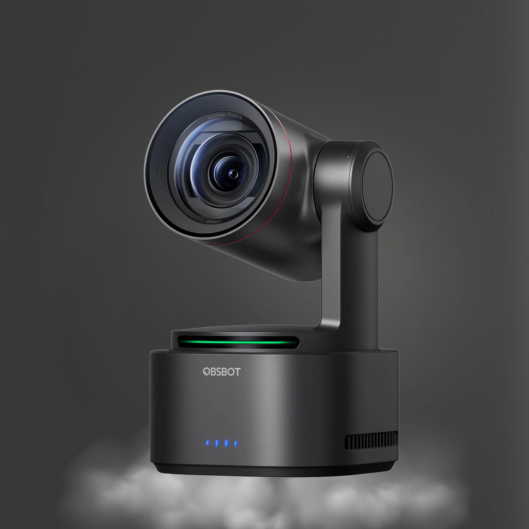
Start with camera capability. For solo presenters, instructors, and hosts moving around a stage or teaching area, AI tracking is often more useful than extreme zoom range. OBSBOT camera models built around AI Tracking 2.0 can maintain a subject's framing as they move, reducing manual PTZ adjustments during a live program. This is not a replacement for an experienced camera operator on a complex show, but it can make a small team substantially more capable.
Image resolution is equally contextual. A 4K camera provides additional detail and room for cropping in postproduction, but resolution alone does not determine a professional result. Consider low-light performance, autofocus behavior, field of view, sensor characteristics, and the outputs required by the rest of the system. A wide webcam can be right for a desk-based presentation; a PTZ camera is usually a better fit for a boardroom, worship space, classroom, or studio with changing camera positions.
The retailer should also carry more than one level of equipment. An independent creator may need a compact 4K webcam and USB microphone. A corporate communications department may need multiple PTZ cameras, network video, a switcher, and conference audio. Product selection should let buyers begin with a practical configuration and scale without replacing the entire workflow.
Match the Camera Output to Your Production Workflow
Before choosing a camera, identify how video will reach the computer, switcher, recorder, or network. This step prevents a common and expensive mistake: buying a capable camera with an output that does not match the production environment.
USB is direct and efficient for single-camera conferencing, webinars, and computer-based streaming. It is often the fastest route to better remote presentation quality. HDMI works well for short, high-quality connections to capture devices and switchers. SDI is commonly preferred in fixed installations and longer cable runs because of its locking connectors and distance capability.
NDI changes the equation for networked production. An NDI-enabled camera can send video through a compatible network, allowing operators to place cameras where traditional video cabling is inconvenient. It can simplify multi-room and multi-camera deployments, but it is not magic. Network capacity, switch configuration, power planning, latency expectations, and receiver compatibility must be evaluated before installation. A retailer that understands NDI workflows can help buyers avoid treating ordinary office networking as guaranteed broadcast infrastructure.
PTZ control deserves the same attention. If a production requires repeatable camera positions, presets and remote control are essential. A PTZR camera adds rotation capability that can support more flexible vertical and horizontal content framing. That is valuable for teams producing a standard widescreen show while also preparing social-first vertical clips or live feeds. The best choice depends on whether your program requires fixed shots, active subject tracking, or operator-driven framing.
When AI Tracking Is the Better Investment
AI tracking delivers its strongest value when one person is responsible for presenting and operating. Fitness instructors, lecturers, product demonstrators, pastors, and streamers can stay engaged with the audience instead of repeatedly returning to a control position. It also helps smaller crews cover movement with fewer hands on camera control.
There are limits. Tracking can be less predictable when several people cross the frame, when a subject is frequently blocked, or when a show demands intentional composition changes between speakers. For a roundtable, panel, or concert, preset-based PTZ operation and a switched multi-camera plan may provide more dependable control. Automation should reduce routine work, not force every production style into the same camera behavior.
Audio Is Part of the Camera Decision
Viewers will accept a slightly imperfect image more readily than unclear speech. That makes microphone selection central to any camera purchase, especially for livestreams, podcasts, conferences, and training sessions. The microphone type should follow the source, room, and operating method.
A lavalier microphone keeps the capsule close to a speaker and is useful when the presenter moves. A shotgun microphone offers focused pickup for on-camera recording when it can be placed correctly outside the frame. Conference microphones are designed for meetings and group communication, while vocal microphones are built around close, intentional speech or performance. CKMOVA options across these categories allow a production system to address specific pickup requirements instead of relying on a built-in camera mic.
Pickup pattern matters as much as the microphone format. A supercardioid microphone can reject more sound from the sides than a broad pickup design, helping isolate speech in a noisy environment. It still cannot remove every problem created by hard walls, HVAC systems, or a microphone placed too far from the source. Good placement, reasonable room treatment, and correct input gain remain necessary.
For multi-camera work, ask how audio will enter the system. It may go directly into a camera, an audio interface, a mixer, or a video switcher. Each route affects monitoring, sync, backup recording, and operator control. Planning this before purchase is faster than trying to solve lip-sync or low-level audio during a live event.
Evaluate Switching and Control Before You Need It
A single camera can support a strong stream, but switching creates a more deliberate program. A live video switcher allows an operator to cut between a presenter shot, a wide angle, slides, remote guests, and pre-recorded media. CineTreak professional cameras and live video switchers are relevant where a compact production needs multi-format livestreaming without the footprint of a larger control room.
The right switcher is determined by inputs and outputs, not only by its number of buttons. Count every current source and leave room for the next one. Verify supported resolutions and frame rates, keying requirements, audio inputs, recording needs, display outputs, and streaming method. If you need a confidence monitor, teleprompter feed, or separate program recording, those requirements should be known early.
Control workflow is also a staffing question. An AI-tracked camera paired with simple switching may allow one operator to run a polished interview or presentation. A high-stakes hybrid event with multiple speakers, graphics, remote contributors, and playback normally needs clearer role separation. Compact equipment reduces physical complexity, but it does not eliminate the need for rehearsals, signal checks, and backup plans.
Service Details That Matter After Checkout
Professional equipment purchases should include practical buying support. Clear stock status, secure payment, order visibility, product discovery tools, and access to assistance are useful when a project has a fixed launch date. Back-in-stock notifications can be especially helpful when a specific camera or accessory is required to complete an established system.
Also review shipping thresholds and exchange terms before placing an order. Kong Kei Industrial offers qualifying-order free shipping and a seven-day exchange policy, which can provide additional confidence when selecting specialized production hardware online. Confirm compatibility first, however, because an exchange process is not a substitute for checking connector types, power requirements, mounting needs, and software support.
For buyers outside Hong Kong, assess the practical details that affect deployment: regional power compatibility, delivery timing, duties where applicable, and local network or installation support. The retailer's location is less important than its ability to supply the exact equipment and technical category needed for the workflow.
A good camera purchase makes the next production easier to operate. Choose the system that gives your team clean framing, dependable signal transport, controlled switching, and clear speech at the scale you can realistically manage. That is the configuration that keeps attention on the program rather than on the equipment rack.